Law Clerk
Launch your legal career.
- Learn from dedicated faculty who ensure that your skills surpass industry standards
- You have the option to continue your studies in the Paralegal Graduate Certificate at Algonquin College
- Small class sizes enable students to have stronger peer relationships, and closer contact with professors
Program Availability and Schedule
Availability
Open
Closed
Waitlisted
Start Term
Availability
International
Availability
Competitive?
Fall 2024
No
Winter 2025
No
Schedule
Program Summary
Credential
Program Delivery
Program Code
Area of Interest
School
Campus
Work Integrated Learning
In the two-year Law Clerk Ontario College Diploma program, you study a broad range of legal topics and processes to prepare you for a career as a legal assistant or law clerk.
This program prepares you for administrative work in an office environment where you work independently under the general direction of a lawyer, or as part of a legal services team. Learn from dedicated faculty who ensure that your skills surpass industry standards....(read more)
Overview
Launch your legal career.
In the two-year Law Clerk Ontario College Diploma program, you study a broad range of legal topics and processes to prepare you for a career as a legal assistant or law clerk.
This program prepares you for administrative work in an office environment where you work independently under the general direction of a lawyer, or as part of a legal services team. Learn from dedicated faculty who ensure that your skills surpass industry standards.
As a student, you develop and practise the skills that are essential for a successful career, including:
- paying attention to details and independently following instructions
- organizing client files and managing deadlines
- interviewing clients
- performing general office procedures
- working with legal software to compile information and prepare documents
- compiling evidence and documentation
- maintaining corporate documents and filings
- entering data in legal forms and drafting routine correspondence
- preparing briefs
- learning about family, estates, civil litigation, corporate, administrative and real estate law practices
- engaging in civil litigation and research
Benefit from the ability to participate in an off-site field placement or in an in-class workplace simulation. These experiences give you real-world experience and an opportunity to practise your skills.
Graduates have the skills and flexibility to apply their knowledge in a variety of entry-level law clerk positions within:
- law offices
- corporations
- government legal departments and agencies
- financial institutions
- court and registry offices
SUCCESS FACTORS
This program is well-suited for students who:
- Possess excellent interpersonal and human relations skills.
- Are organized, detail-oriented and flexible.
- Work well under pressure.
- Have a strong literacy and communications background.
- Have a high standard of ethics.
Courses
Programs at Algonquin College are delivered using a variety of instruction modes. Courses may be offered in the classroom or lab, entirely online, or in a hybrid mode which combines classroom sessions with virtual learning activities. Upon registration, each full-time student is provided an Algonquin email account which is used to communicate important information about program or course events.
Code:
ENL1962
Course Name:
English Fundamentals
Course Description:
Students develop language skills necessary to promote success in program courses and, ultimately, business careers. Students achieve correct... + Read More
Hours:
42.0
Code:
GEN1001M
Course Name:
Ethics: What Is the Big Deal?
Course Description:
A number of high-profile cases during the last decade have increased people's awareness of the significant role played by values and choices... + Read More
Hours:
42.0
Code:
LAW1706L
Course Name:
Torts and Contracts
Course Description:
The study of the principles of tort and contract law provides a foundation for better understanding of a variety of specialized areas of law... + Read More
Hours:
42.0
Code:
LAW2208L
Course Name:
Legal Fundamentals for Law Clerks
Course Description:
Students explore Canada's legal system including the legislative process, the jurisdiction of different levels of government, the sources an... + Read More
Hours:
42.0
Code:
LAW2245L
Course Name:
Legal Research I
Course Description:
Effective preparation for court appearances, as well as providing advice to clients requires research of relevant law. Students learn to use... + Read More
Hours:
28.0
Code:
LAW2265L
Course Name:
Legal Computer Applications I
Course Description:
Students learn the essentials of the computer operating system, presentation software, spreadsheet application software, personal informatio... + Read More
Hours:
42.0
Code:
ENL1813B
Course Name:
Communications I
Course Description:
Communication remains an essential skill sought by employers, regardless of discipline or field of study. Using a practical, vocation-orient... + Read More
Hours:
42.0
Code:
LAW2222L
Course Name:
Civil Procedures I
Course Description:
Litigation in the civil courts requires an understanding of the jurisdiction and procedural requirements of the numerous courts at the provi... + Read More
Hours:
56.0
Code:
LAW2230L
Course Name:
Residential Tenancies and Commercial Leasing
Course Description:
Students are introduced to the legislation and contracts which govern the landlord and tenant relationship in both residential and commercia... + Read More
Hours:
42.0
Code:
LAW2260L
Course Name:
Legal Research II
Course Description:
Effective preparation for court appearances, as well as providing advice to clients requires research of relevant law. Students learn to use... + Read More
Hours:
42.0
Code:
LAW2270L
Course Name:
Legal Computer Applications II
Course Description:
Students continue to develop their skills using word processing software. Using advanced word processing software functions, students prepar... + Read More
Hours:
42.0
Code:
GED0220
Course Name:
General Education Elective
Course Description:
Students choose one course, from a group of general education electives, which meets one of the following five theme requirements: Arts in S... + Read More
Hours:
42.0
Code:
LAW0032L
Course Name:
Real Estate Procedures
Course Description:
Students learn the theory behind real estate applications and apply real estate knowledge by preparing a complete client file involving the ... + Read More
Hours:
56.0
Code:
LAW0033L
Course Name:
Corporate Law
Course Description:
Corporations are a form of business organization recognized and regulated by law. Using applicable legal software, students learn the substa... + Read More
Hours:
56.0
Code:
LAW0042L
Course Name:
Legal Computer Applications III and Evidentiary Management
Course Description:
Students continue towards the development of advanced word processing skills and prepare a variety of documents relevant to the discovery pr... + Read More
Hours:
28.0
Code:
LAW2206L
Course Name:
Family Law
Course Description:
Law clerks assist lawyers in the preparation of appropriate documentation for the creation, as well as the breakdown of domestic relations t... + Read More
Hours:
42.0
Code:
LAW2232L
Course Name:
Civil Procedures II
Course Description:
Applying the relevant rules of civil procedure, students learn to draft a variety of court documents from the initiation of an action to fin... + Read More
Hours:
56.0
Code:
ENL1725
Course Name:
Canadian Identity
Course Description:
Canadian identity is challenging to define, but depictions of our multicultural society are found and explored in our writing. This course e... + Read More
Hours:
42.0
Code:
ENL1726
Course Name:
Symbols, Text and Meaning
Course Description:
Symbols and text are used to express, evoke, and manipulate an entire range of human emotions and reactions. In this interactive, discussion... + Read More
Hours:
42.0
Code:
ENL1798
Course Name:
Contemporary Canadian Issues
Course Description:
A critical understanding of contemporary Canadian issues is vital to being an active member in our democratic society. Students explore a va... + Read More
Hours:
42.0
Code:
ENL1825
Course Name:
Communication Dynamics
Course Description:
Humans are dynamic, communicative, and socially interactive. Participants consider human behaviour and its influence on interpersonal or imp... + Read More
Hours:
42.0
Code:
ENL1829
Course Name:
The Art of Oratory
Course Description:
From ghost stories around the campfire to political speeches by world leaders, ethical oratory plays a significant role in human interaction... + Read More
Hours:
42.0
Code:
ACC2292L
Course Name:
Legal Accounting
Course Description:
Students become familiar with the recording of basic accounting transactions in a manual accounting system. Students also learn to set up a ... + Read More
Hours:
42.0
Code:
LAW2207L
Course Name:
Administrative and Federal Court Practice
Course Description:
The implementation of a multitude of government policy initiatives and procedures has been delegated to a wide variety of administrative bod... + Read More
Hours:
56.0
Code:
LAW2234L
Course Name:
Civil Procedures III
Course Description:
Successful representation of clients in civil cases requires an understanding of how judgments are obtained and enforced. Students learn abo... + Read More
Hours:
56.0
Code:
LAW2254L
Course Name:
Estate Administration and Procedures
Course Description:
Administration of an individual's affairs by another can occur at a time of mental incapacity or at death. Students learn the applicable leg... + Read More
Hours:
56.0
Code:
FLD0013L
Course Name:
Law Clerk Field Placement
Course Description:
Students may have the opportunity to participate in an external field placement, if established criteria are met. Students apply the skills... + Read More
Hours:
56.0
Code:
LAW0043L
Course Name:
Law Clerk Work Practicum
Course Description:
Students in the final semester of the program, drawing on knowledge attained in previous course work, will participate in weekly practice an... + Read More
Hours:
56.0
Careers & Pathways
Careers
Graduates have the skills and flexibility to apply their knowledge in a variety of entry-level law clerk positions within law offices, corporations, government legal departments and agencies, financial institutions, court and registry offices.
The descriptions of legal skills, responsibilities, and settings indicate the abilities and environment in which the graduate may generally work and are not intended to imply that the law clerk is practising law.
Pathways
Please note: There may be more pathways available for this program than are listed here. Please use our Pathways search tool to see every option.
Learning Outcomes
The graduate has reliably demonstrated the ability to:
- Support the needs of clients and legal professionals through the use of accurate terminology and professional communication strategies, both orally and in writing.
- Complete all work within routine and unexpected time lines and limitation periods within the legal environment.
- Use current and relevant electronic and print resources, within the legal environment, to conduct legal research, to assist with file and evidentiary management, to facilitate communication and generate legal documentation, complying with current regulations and procedures.
- Research and summarize the presenting legal issues, applying knowledge of substantive law, to support the legal team.
- Apply rules of procedure to support best legal practices.
- Conduct oneself professionally in adherence to the guidelines of the Law Society of Ontario.
- Carry out clerical and administrative duties for the operation of a variety of legal environments.
- Outline strategies for ongoing professional development to ensure continuing competence as a Law Clerk.
- Act equitably and justly with diverse populations.
- Provide support for legal professionals in courts and administrative tribunals within the legal system.
- Identify and apply discipline-specific practices that contribute to the local and global community through social responsibility, economic commitment and environmental stewardship.
Tuition & Fees
Get an idea of how much each semester will cost with our Tuition and Fee Estimator.
2023/2024 Academic Year
Tuition and related ancillary fees for this program can be viewed by using the Tuition and Fees Estimator tool at www.algonquincollege.com/fee-estimator.
Further information on fees can be found by visiting the Registrar`s Office website at www.algonquincollege.com/ro.
Fees are subject to change.
Additional program related expenses include:
- Books and supplies cost approximately $1,300 per year and can be purchased at the campus store.
- Printing costs of approximately $50 per term.
Admissions Requirements
All applicants must satisfy both College Eligibility and Program Eligibility requirements.
College Eligibility
- Ontario Secondary School Diploma (OSSD) or equivalent. Applicants with an OSSD showing senior English and/or Mathematics courses at the Basic Level, or with Workplace or Open courses, will be tested to determine their eligibility for admission; OR
- Academic and Career Entrance (ACE) certificate; OR
- General Educational Development (GED) certificate; OR
- Mature Student status (19 years of age or older and without a high school diploma at the start of the program). Eligibility may be determined by academic achievement testing for which a fee of $50 (subject to change) will be charged.
Program Eligibility
- English, Grade 12 (ENG4C or equivalent).
- Applicants with international transcripts must provide proof of the subject-specific requirements noted above and may be required to provide proof of language proficiency. Domestic applicants with international transcripts must be evaluated through the International Credential Assessment Service of Canada (ICAS) or World Education Services (WES).
- IELTS-International English Language Testing Service (Academic) Overall band of 6.0 with a minimum of 5.5 in each band; OR TOEFL-Internet-based (iBT) Overall 80, with the minimum of 20 in each component: Reading 20; Listening 20; Speaking 20; Writing 20; OR Duolingo English Test (DET) Overall 110, minimum of 110 in Literacy and no score below 95.
Not sure if you meet all of the requirements? Academic Upgrading may be able to help with that: https://www.algonquincollege.com/access/.
Should the number of qualified applicants exceed the number of available places, applicants will be selected on the basis of their proficiency in English.
Application Information
LAW CLERK
Program Code 0220X01FWO
Applications to full-time day programs must be submitted with official transcripts showing completion of the academic admission requirements through:
ontariocolleges.ca
60 Corporate Court
Guelph, Ontario N1G 5J3
1-888-892-2228
Students currently enrolled in an Ontario secondary school should notify their Guidance Office prior to their online application at www.ontariocolleges.ca.
Applications for Fall Term and Winter Term admission received by February 1 will be given equal consideration. Applications received after February 1 will be processed on a first-come, first-served basis as long as places are available.
International applicants please visit this link for application process information: https://algonquincollege.force.com/myACint/.
For further information on the admissions process, contact:
Registrar`s Office
Algonquin College
1385 Woodroffe Ave
Ottawa, ON K2G 1V8
Telephone: 613-727-0002
Toll-free: 1-800-565-4723
TTY: 613-727-7766
Fax: 613-727-7632
Contact: https://www.algonquincollege.com/ro
Additional Information
Program Resources
Students seeking exemptions or Advanced Standing for courses in the program should consult with the coordinator of the program prior to taking the course to determine whether the course content of the proposed transfer credit matches the course outcomes of the course in the program of study. While courses may have similar titles, it is not to be assumed that credit is granted. Course outlines, as well as course descriptions need to be assessed to determine transferability of credit. A minimum grade requirement is applicable.
The Law Clerk program prepares you for assisting lawyers with legal administrative work. If you enjoy advocating for others and are entrepreneurial, you may wish to consider Algonquin College`s Paralegal Ontario College Graduate Certificate program.
Note: Courses may be scheduled at any time between 8 a.m. and 10 p.m.
Note: A Criminal Records Check may be required for placement and employment purposes.
Contact
Marcia Green
Program Coordinator
Victoria Barney
Program Coordinator
David Ang
Professor
Tessa Foster
Student Success Specialist
Cale Harrison
Professor
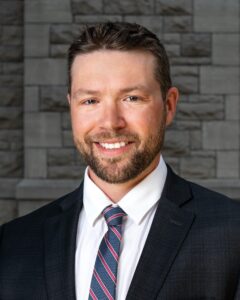
Cale is an experienced litigation lawyer. Prior to joining the faculty, Cale was in full-time private practice with a local Ottawa firm. His practice focused primarily on serious personal injury cases, long term disability and other insurance denials, and estate litigation. He has appeared in cases before the Ontario Superior Court of Justice, Divisional Court, various administrative tribunals, and in several other courts across the country.
Cale has been a member of the County of Carleton Law Association since 2009 and spent several years as a member of the Civil Litigation Conference Planning Committee. In that role, he assisted in the development and execution of the CCLA’s annual Civil Litigation Conference, which is one of the most coveted conferences in Canada. Cale has been a frequent speaker and moderator at the conference.
For over 10 years, Cale has been a member – and most recently Chairperson – of the organizing committee for the YMCA-YWCA’s annual Lawyers for Kids charity hockey tournament. This event brings together lawyers and legal staff from Eastern Ontario in support of the YMCA-YWCA’s children’s programs and has raised over $100,000 in charitable funds since its inception.
Cale began teaching at Algonquin College in 2018 and joined the full-time faculty in 2020. He is passionate about teaching and greatly enjoys sharing his legal experiences with his students.
Charles Lynch
Professor
After receiving his LLB from Osgoode Hall Law School and completing articles in Toronto, Charles practiced mainly corporate and commercial law as an associate at two large national firms, in Calgary and in Ottawa. Helping mostly business clients with securities laws, corporate agreements of purchase and sale, mergers, amalgamations, financings, regulatory matters and corporate meetings and governance, as well as some employment law, he provided a good sense of various businesses’ legal needs.
Charles began teaching at the College in 2016 and joined the full-time faculty in 2018, bringing a passion for teaching practical skills to students in both the paralegal and law clerk programs.
Sharon Norris
Professor
Francine Roach
Professor

Francine brings both legal and educational experience to her position at the College. She received her LL.B. from the University of Ottawa, and her Masters in Adult Education from St. Francis Xavier University. She practiced law with the Ottawa firm of Soloway Wright, and worked primarily in the fields of civil litigation, labour law and administrative law. She also worked as an instructor, full-time faculty member, and appeal committee member with the Law Society of Ontario – Ottawa Bar Admission Program.
Francine’s experience includes teaching in French and English at the University of Ottawa, Algonquin College, and La Cité collégiale, as well as business law courses in China in support of Algonquin College School of Business international initiatives.
She is passionate about the changing nature of the education system. Working as a consultant with the Minister of Training, Colleges and Universities, Francine developed outcome-based provincial program standards. She has completed Program Quality Reviews at the provincial level, and Program Quality Assessments at the international level. Recently she worked as a facilitator in the Faculty Learning and Development program at the Algonquin Centre for Organizational Learning.
Asfrah Syed-Emond
Professor

Prior to joining the faculty, Asfrah practiced in civil litigation and wills and estates with Syed-Emond Lawyers and Emond & Associates. She has a B.A. (Hons.) from the University of Ottawa in English Literature and an LL.B., also from U of O. She has represented clients before appellate courts, Superior Court, tribunals and she participated in numerous mediations. She has been teaching since 2016.
Outside the College, Asfrah is a member of the County of Carleton Law Association (CCLA) and was the Chair or the Diversity Committee from 2016 to September 2018. She remains an active member of this committee. While at Law School she was one of the founding members of the On-Line Law Library and Information System (OLLIS) Ottawa, Common Law Department. The OLLIS project involved the creation of the first comprehensive electronic law library in the world. It was created to provide law materials in an accessible format for students with a print-disability.
Asfrah has presented before the Law Society of Ontario and co-authored legal papers. She co-presented at the 2018 National Forum – Access to Justice, Law Needs Feminism at the University of Ottawa, Law School (March 3, 2018), “Strategizing Career Success: Moving from the Margins to Claim the Intersection”. She also presented at the Law Society of Ontario (continuing professional development) on Cross Examination Tactics for Paralegals in “Evidence in Small Claims Court For Paralegals” – June 5, 2017. Asfrah often appears as a guest speaker at local legal community events and acts as a mentor to law students. She has co-authored: “Response on behalf of CCLA to Racialized Report”, Diversity Committee [2016]; CCLA- working group LLP and PDC paper [May 2017 – 2018]; CCLA Inclusive Language Guide, Prepared by the CCLA Diversity Committee [2017]. Her passion is working towards creating an inclusive and diverse environment.