Sport Business Management
Turn your passion for sport into a rewarding business career.
- Interact with industry professionals in Canada's capital, which has more national sport-governing bodies than any other city in Canada
- Gain industry experience by competing in a real-world bid development package contest with a Canadian sport industry partner
- Gain insight and guidance from leading industry experts who share their tools and strategies for success in the field
Program Availability and Schedule
Availability
Open
Closed
Waitlisted
Start Term
Availability
International
Availability
Competitive?
Fall 2024
No
Schedule
Program Summary
Credential
Program Delivery
Program Code
Area of Interest
School
Campus
Work Integrated Learning
The one-year Sport Business Management Ontario College Graduate Certificate program prepares you for an exciting career in the ever-growing, multibillion-dollar sport industry.
Interact with industry professionals in Canada`s capital, where there are variety of professional sport franchises and more national sport-governing bodies than any city in Canada. Leading industry experts share their insights about and experience with the tools and strategies for success in sport business management....(read more)
Overview
Turn your passion for sport into a rewarding business career.
The one-year Sport Business Management Ontario College Graduate Certificate program prepares you for an exciting career in the ever-growing, multibillion-dollar sport industry.
Interact with industry professionals in Canada`s capital, where there are variety of professional sport franchises and more national sport-governing bodies than any city in Canada. Leading industry experts share their insights about and experience with the tools and strategies for success in sport business management.
The program builds on basic business operations such as finance, economics, sales and marketing applied specifically to the sporting environment. You develop knowledge and skills to:
- drive revenue through ticket sales and corporate sponsorship
- strengthen interaction and engagement with audiences through digital analytics and digital marketing
- support safe sport initiatives, equity, diversity and inclusion in sport
- manage the sporting event experience for a variety of audiences
- prepare for employment in a wide variety of sport agencies including: major professional sport teams; national sport organizations; community teams; e-sport leagues; or running your own sport-related business
Through field placement opportunities with professional, national and local sport organizations, you gain networking and work experience to help start your career in the sport management world. Through a capstone project, you use business plan development skills as you work in teams with a Canadian sport industry partner to prepare a bid proposal for hosting a major sporting competition.
Graduates may find employment in professional, national and community sport organizations in a variety of areas, including:
- sport event management
- sport administration and finance
- sales and marketing
- sponsorship
- communications
- digital analytics
- sport tourism and bid planning
- sport policy development
SUCCESS FACTORS
This program is well-suited for students who:
- Have a passion for sport.
- Possess excellent time-management skills.
- Are well-organized, energetic and enjoy working with people.
- Have interest in planning and executing sport business initiatives.
- Are motivated to lead.
Courses
Programs at Algonquin College are delivered using a variety of instruction modes. Courses may be offered in the classroom or lab, entirely online, or in a hybrid mode which combines classroom sessions with virtual learning activities. Upon registration, each full-time student is provided an Algonquin email account which is used to communicate important information about program or course events.
Code:
MGT2120
Course Name:
Introduction to Sport Management
Course Description:
Sport Management professionals combine the administration of sport with the fundamentals of business to work as leaders in an ever-changing ... + Read More
Hours:
42.0
Code:
MGT2123
Course Name:
Sport Financial Management
Course Description:
Managing finances is key to the success of any business, including sport. Through case studies, students explore how individuals, non-profit... + Read More
Hours:
42.0
Code:
MGT2124
Course Name:
Driving Revenue in Sport - Applied Project
Course Description:
One of the main revenue sources for Canadian sport organizations is ticket sales. Students examine strategies to sell tickets through a vari... + Read More
Hours:
42.0
Code:
MGT2130
Course Name:
Communication in Sport
Course Description:
The ability to communicate one's message to specific audiences is critical to success in the business environment. Students develop the comm... + Read More
Hours:
42.0
Code:
MGT2139
Course Name:
Sport Tourism
Course Description:
Sport tourism is one of the fastest growing segments of the multi-billion-dollar tourism industry. Sport tourism encompasses both the hostin... + Read More
Hours:
42.0
Code:
MGT2152
Course Name:
Sport Event Management
Course Description:
Much of the contemporary sport landscape revolves around the production of live sporting events. Students explore a variety of specific even... + Read More
Hours:
42.0
Code:
MGT2126
Course Name:
Sport Economics
Course Description:
In order to thrive as a business, decisions are made based on sound economic theory and practice. Students examine the financial elements of... + Read More
Hours:
42.0
Code:
MGT2128
Course Name:
Marketing Sport
Course Description:
Contemporary marketing practices and skills are central to the financial success of any business, including sport. Students analyze the role... + Read More
Hours:
42.0
Code:
MGT2129
Course Name:
Major Games and Bid Planning
Course Description:
Bidding to host a sporting event is an opportunity to convince that you are capable of planning, organization and implementing an economical... + Read More
Hours:
42.0
Code:
MGT2131
Course Name:
Field Placement 1
Course Description:
Working for a professional or amateur sport business, service or organization provides the opportunity to build on previous work-integrated ... + Read More
Hours:
190.0
Code:
MGT2136
Course Name:
Sport Policy
Course Description:
Throughout the sporting world there has been an increase in governmental intervention and public funding to enhance opportunities for partic... + Read More
Hours:
42.0
Code:
MGT2153
Course Name:
Sport Analytics
Course Description:
Data analytics is an emerging strategy that creates a competitive advantage in the world of sport. Students evaluate how data-driven decisio... + Read More
Hours:
42.0
Code:
MGT2132
Course Name:
Legal and Ethical Issues of Sport
Course Description:
Sport organizations face an array of legal and ethical issues that must be addressed proactively and reactively. Focus is on the legal requi... + Read More
Hours:
42.0
Code:
MGT2134
Course Name:
Corporate Sport Sponsorship
Course Description:
Corporate support provides additional opportunity for funding in addition to member fees and public subsidy. Students evaluate and analyze t... + Read More
Hours:
42.0
Code:
MGT2137
Course Name:
Field Placement 2: Sport Management
Course Description:
Working for a professional or amateur sport business, service or organization provides students the opportunity to integrate theory and prac... + Read More
Hours:
190.0
Code:
MGT2141
Course Name:
Digital Marketing and Entrepreneurship in Sport
Course Description:
Sport individuals, clubs and organizations have the opportunity to interact directly with an audience through a variety of social media plat... + Read More
Hours:
42.0
Code:
MGT2154
Course Name:
Current Issues and Trends in Sport
Course Description:
In order to remain relevant and be successful, sport organizations must identify and adapt to emerging trends. Issues surrounding safe sport... + Read More
Hours:
42.0
Careers & Pathways
Careers
Graduates may be employed in a wide range of sport management activities: event planning; sales; marketing; facility management; and, business administrative positions within professional sport, national and provincial sport governing bodies, public agencies, community recreation departments, sporting goods companies, sport marketing agencies, sport agent operations and athletic service organizations.
Pathways
Please use our Pathways tool to search for pathway options.
Learning Outcomes
The graduate has reliably demonstrated the ability to:
- Develop ongoing strategies and plans to enhance personal and professional growth as a leader in the sport business industry.
- Leverage technology and research to analyze data in support of business decision-making, and opportunity identification.
- Apply accounting and financial management skills to the analysis and management of a sport organization.
- Communicate information in multiple formats suitable for a variety of audiences to support sport business management and operations.
- Research and develop strategic marketing plans that meet the needs of a sport business or organization.
- Develop sponsorship programs/packages that support the goals of a sport organization.
- Develop and implement customer service and selling strategies to meet the needs of sport business stakeholders.
- Manage a sport organization in accordance with the legal and ethical standards, and governance practices of the sport industry profession.
- Coordinate and apply human resource management strategies to optimize staff and volunteers` contributions to a sport organization, enterprise or event.
- Develop business plans for bidding on and hosting sporting events using sport tourism and event management best practices.
- Use evidence-based strategies to mitigate risk and promote positive experiences in the sport industry.
- Identify and apply discipline-specific practices that contribute to the local and global community through social responsibility, economic commitment and environmental stewardship.
Tuition & Fees
Get an idea of how much each semester will cost with our Tuition and Fee Estimator.
2023/2024 Academic Year
Tuition and related ancillary fees for this program can be viewed by using the Tuition and Fees Estimator tool at www.algonquincollege.com/fee-estimator.
Further information on fees can be found by visiting the Registrar`s Office website at www.algonquincollege.com/ro.
Fees are subject to change.
Additional program related expenses include:
- Books cost approximately $800 to $1,200 in total.
Admissions Requirements
Program Eligibility
- Ontario College Diploma, Ontario College Advanced Diploma or Degree or equivalent.
- Applicants with international transcripts must provide proof of the subject-specific requirements noted above and may be required to provide proof of language proficiency. Domestic applicants with international transcripts must be evaluated through the International Credential Assessment Service of Canada (ICAS) or World Education Services (WES).
- IELTS-International English Language Testing Service (Academic) Overall band of 6.5 with a minimum of 6.0 in each band; OR TOEFL-Internet-based (iBT)-overall 88, with a minimum of 22 in each component: Reading 22; Listening 22; Speaking 22; Writing 22; OR Duolingo English Test (DET) Overall 120, minimum of 120 in Literacy and no score below 105.
Application Information
SPORT BUSINESS MANAGEMENT
Program Code 6073X01FWO
Applications to full-time day programs must be submitted with official transcripts showing completion of the academic admission requirements through:
ontariocolleges.ca
60 Corporate Court
Guelph, Ontario N1G 5J3
1-888-892-2228
Students currently enrolled in an Ontario secondary school should notify their Guidance Office prior to their online application at www.ontariocolleges.ca.
Applications for Fall Term and Winter Term admission received by February 1 will be given equal consideration. Applications received after February 1 will be processed on a first-come, first-served basis as long as places are available.
International applicants please visit this link for application process information: https://algonquincollege.force.com/myACint/.
For further information on the admissions process, contact:
Registrar`s Office
Algonquin College
1385 Woodroffe Ave
Ottawa, ON K2G 1V8
Telephone: 613-727-0002
Toll-free: 1-800-565-4723
TTY: 613-727-7766
Fax: 613-727-7632
Contact: https://www.algonquincollege.com/ro
Additional Information
Program Resources
In order to progress from one program level to the next level, as well as graduate from the program, students must attain an overall average grade of 60% (or a C- or a 1.7 GPA).
Within the field placement courses, students are required to participate in at least three special projects per term, with the coordinator`s approval, in addition to field placements.
Contact
Ed Blomeley
Program Coordinator
Room H217c
Ed brings expertise in a range of academic and business education topics, including broadcasting, business administration, communications, brand management, and digital media.
Previous to the ACSBM Program Coordinator position; Ed had been an instructor in the program for five years, also was an instructor in the Broadcasting department at AC, and taught Business Concepts to Dental students in AC Allied Health Dept.
Outside of Algonquin Ed had participated in the uOttawa eMBA development committees and has engineering certification studies focused on Quality Management and ISO 900 Standards.
As a businessman, serial entrepreneur, and network television producer Ed Blomeley provides world class stakeholder engagement innovation, media programming, and digital transformation management services to clients ranging from multinational enterprises to SMBs.
Under his stewardship Blomeley Communications Inc. has transformed from a network sports producer to become a specialized group of companies recognized for leadership in multi-platform development, content production, and online B2B sales delivery.
The Blomeley Group works with an international client base with programs, services, and applications seen worldwide on all platforms.An award winning digital media producer, Ed’s also produced and/or directed hundreds of hours of network and factual television, NHL hockey, Olympics, major sport events, along with many news, documentaries, and corporate initiatives.
He is a proven leader with demonstrated success in media production, brand management, education, and international broadcast communications platforms.Blomeley production expertise has been part of Emmy and Gemini award nominated television productions. Ed is a board member of the Ottawa Sports Hall of Fame, and the Eastern Ontario Public Education Television Association Foundation.
Matt Bennett
Professor
Matt is an experienced sales and partnership marketing leader with a proven track record of building impactful relationships with key stakeholders at local, regional and national levels over the past 15 years. In his current role as Vice President of Corporate Partnerships & Consumer products, Matt is responsible for the overall operation and business health of the Sponsorship, Premium Seating and Merchandise functions at Ottawa Sports & Entertainment Group (OSEG).
Prior to joining OSEG in 2015 as Director, Corporate Partnerships, Matt spent nine years at Senators Sports & Entertainment where we held various positions in Community Development, Ticketing and Premium Properties. Matt is enjoying his 3rd year as part of the Sport Business Management program where he currently teaches Driving Revenue in Sport and Corporate Sport Sponsorship.
Born and raised in Ottawa, Matt is a proud Brock Badger alum (SPMA, 2004) and holds a Masters degree from the University of Windsor (MHK, 2006). Matt currently lives in Kanata with his wife Heather and two kids, Hadley & Dax.
Nicole Clarke
Professor
Nicole has worked in the sport industry for almost 20 years, mostly in track and field. Most of her career has been spent working on events, from provincial and national championships to the Olympic Games. Highlights include the 2010 Vancouver Olympic and Paralympic Games, the 2015 Pan American & Para Pan American Games, the 2017 North American Indigenous Games and the 2018 NACAC Championships.
Currently, I am National Teams Manager with Athletics Canada, overseeing the planning and execution of numerous senior national teams, including the World Athletics Championships and the Olympic Games.
Darrell Cox
Professor
After a 20-year career with the City of Ottawa Economic Development Department supporting local entrepreneurs and promoting Ottawa as an attractive investment location, in 2011 Darrell spearheaded the creation of Events Ottawa, a partnership between the City of Ottawa and Ottawa Tourism.
Over his 8 years as Manager, Major Events Darrell was responsible for attracting over 120 high profile national and international championship events to Ottawa, generating over $350M in local economic impact and positioning Ottawa as a leading destination for major event hosting.
Darrell also served as Chair of the Technical Review Committee for Ottawa’s 2021 Canada Summer Games bid and was also Chair of the Ottawa Bid Committee for both the FIFA U20 World Cup Canada 2007 and FIFA Women’s World Cup Canada 2015.
Darrell is currently working for the Township of North Glengarry, actively promoting residential growth and economic development opportunities, and is also a part-time professor at Algonquin College in the Sport Business Management program.
He sits on the Board of Directors for the RA Centre, a multi-sport, recreation, and leisure facility with over 22,000 members, and for Urbamania, an Ottawa-Gatineau based organization that works to develop projects or events that have a positive economic, cultural, tourism and environmental impact for the region.
Dr. Mark Dottori
Professor
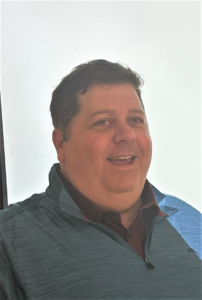
Dr. Mark Dottori went on to a Mitacs postdoctoral research fellowship and a McCall MacBain teaching and leadership postdoctoral fellowship at McMaster University after receiving his PhD in Sport Business Management from the University of Ottawa. He has also earned an MBA from the Schulich School of Business at York University, a graduate certificate in Public Relations Management from Royal Roads University, a certificate in digital analytics from Algonquin College, and an Honours Bachelor of Commerce in Sport Administration from Laurentian University.
Mark is currently completing an executive certificate in management and leadership focusing on analytics from the Sloan School of Management at MIT. Mark has authored more than seven book chapters and has his research has been published in peer-reviewed journals such as the International Journal of Sport Communication, Sport & Communication, Sport Business Management- an International Journal, the Journal of Professional Communication, and the International Journal of Multiple Research Approaches. He has also presented his research at many international conferences.
His industry experience includes marketing and communication positions with organizations such as the Canadian Paralympic Committee, Callaway Golf, the Toronto Raptors, Canada Basketball, and the Canadian Football League.
Mark teaches marketing, business analytics, and digital media management within the School of Business and the Sport Business Management Program at the college. Mark has also taught at McMaster University, The University of Ottawa, Laurentian University, and was a visiting guest lecturer at the Norwegian School of Sport Sciences.
Andrea Guzzo
Professor
Andrea brings to the Sport Business Management program a unique mix of real-world experiences from the crossroad of sports and people. She has owned a Public Relations firm for over two decades providing Public and Media Relations advice, Sponsor Servicing Guidance, and Crisis Issues Management for major national and international clients such as: Petro-Canada (a Suncor Business), FIFA Women’s World Cup Canada 2015, FIVB World League Volleyball and Volleyball Canada, Commonwealth Games Foundation of Canada, The Central Canada Exhibition, Canadian Paralympic Committee, Ottawa Senators Hockey Club, and many more.
In addition, Andrea was the Managing Director of the Commonwealth Games Foundation of Canada, the Director of Parliamentary Affairs for the Senate of Canada, a fitness instructor with GoodLife Fitness, and is an inventor, and a billet mom for the Ottawa 67’s hockey club.
Steve Jarelaza
Professor
Joe Koraith
Professor
Backed by an experience of more than 15 years in journalism and communications, I am a storyteller at heart.
I have honed my skills in three countries and am looking forward to telling more stories.
Whether it’s an athlete or a car or a brand, I utilize my knowledge and experience to tell a compelling story.
I have worked in print, television and online mediums in ‘India’, ‘Qatar’ and ‘Canada’.
I have written feature stories and match reports, designed sports pages, edited articles (a lot of them), written television scripts, appeared on television (twice), worked on CMSs (some easy, some truant), handled social media accounts (emphasis on lead generation and community engagement), interned with sports teams, shaken hands with famous athletes (no autographs please) and driven a Ferrari (twice). I bring a diverse skillset to the table. I am a leader, having handled teams of various sizes in my professional work experience.
Stella Ludlow
Student Success Specialist
Matt Moore
Professor
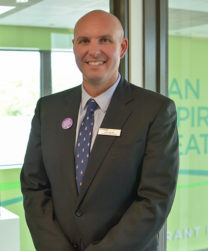
Matt Moore is a professor of Sport Management with a specialized focus on finance. With more than 20 years of invaluable experience in the dynamic hospitality industry, Matt brings a wealth of hands-on knowledge to his classroom, specifically in financial management. His extensive background includes a tenure of 13 years at Chances R Restaurant, where he served as co-owner and dedicated manager. During his time in the industry, he developed a profound understanding of economics, entrepreneurship, and the intricacies of restaurant management.
Matt’s academic achievements include a Bachelor’s degree in Economics from Carleton University, which provided him with a solid foundation for understanding the financial aspects of the field. He further pursued his education by earning a Master’s degree in Hospitality and Tourism from Glion University, focusing on Asset and Revenue Management. This advanced degree equipped him with a comprehensive understanding of the financial intricacies associated with the hospitality and tourism sectors.
Beyond his academic and professional accomplishments, Matt has also dedicated his time and expertise to volunteer work in the realm of sports. With over 30 years of competitive sports experience, he possesses firsthand knowledge of the sports industry and its management. This unique combination of practical experience, academic expertise, and a passion for sports has positioned Matt as a sought-after professor and mentor in the field of Sport Management with a concentration in finance.