Bachelor of Hospitality and Tourism Management (Honours) (Co-op)
The first of its kind in Eastern Ontario -- a hospitality and tourism degree that works.
- Created by industry experts, it's the first of its kind in Eastern Ontario
- A mixture of experiential learning and traditional academia gives you the tools and competencies necessary to succeed in an industry with high job/growth opportunities
- Students and alumni are supported by the program's own Student and Alumni Society, which provides mentorship, tutoring and networking opportunities

Program Availability and Schedule
Availability
Open
Closed
Waitlisted
Start Term
Availability
International
Availability
Competitive?
Fall 2024
No
Schedule
Program Summary
Credential
Program Delivery
Program Code
Area of Interest
School
Campus
Work Integrated Learning
The four-year Bachelor of Hospitality and Tourism Management (Honours) (Co-op) degree program prepares you for supervisory and management careers within the dynamic hospitality and tourism industry. The program gives you a solid knowledge of hospitality and tourism business operations, coupled with effective leadership and management skills.
Created by industry experts, this degree program is the first of its kind in Eastern Ontario. Core components of the program include exponential, theoretical and analytical learning in:...(read more)
Overview
The first of its kind in Eastern Ontario -- a hospitality and tourism degree that works.
The four-year Bachelor of Hospitality and Tourism Management (Honours) (Co-op) degree program prepares you for supervisory and management careers within the dynamic hospitality and tourism industry. The program gives you a solid knowledge of hospitality and tourism business operations, coupled with effective leadership and management skills.
Created by industry experts, this degree program is the first of its kind in Eastern Ontario. Core components of the program include exponential, theoretical and analytical learning in:
- hotel operations management
- leadership and Entrepreneurship
- Food and beverage management
- tourism trends
Throughout the program, you are provided with opportunities to develop teamwork, leadership, communication, critical-thinking and problem-solving skills.
Smaller class sizes allow you the one-on-one time you need to succeed.
Students also gain real-world experience through a paid co-operative education (co-op) work term(s) (see Additional Information for more details). Please note that places in the co-op work term(s) are subject to availability and academic eligibility. Please note admission to a co-op program does not guarantee a co-op placement.
Graduates of this program are equipped with the skills, knowledge and experience leading to highly sought after graduates throughout the industry. Graduates may find employment both locally and globally in:
- hotels or resorts
- restaurants
- cruise lines
- casinos
- consulting firms
- destination marketing organizations
- suppliers to the hospitality and tourism industry
Specific opportunities can include:
- management trainee for large hotel chains
- sales and marketing managers
- revenue/finance managers
- event coordinators/planners
- human resources coordinator
- food and beverage manager/supervisor
- front desk manager/supervisor
- club managers
- attractions managers/supervisors
- restaurant managers/supervisors
- membership coordinator convention visitors bureau
Some graduates may also choose to pursue entrepreneurial opportunities.
SUCCESS FACTORS
This program is well-suited for students who:
- Enjoy interacting with people of diverse backgrounds.
- Enjoy using creative, strategic and critical thinking to solve problems.
- Are interested in examining and addressing sustainable and global hospitality and tourism issues.
- Thrive in a fast-paced and constantly evolving environment.
- Appreciate the value of team work.
Courses
Programs at Algonquin College are delivered using a variety of instruction modes. Courses may be offered in the classroom or lab, entirely online, or in a hybrid mode which combines classroom sessions with virtual learning activities. Upon registration, each full-time student is provided an Algonquin email account which is used to communicate important information about program or course events.
Code:
ECO4101
Course Name:
Microeconomics
Course Description:
Microeconomics studies the behavior of individuals and the market to help businesses make decisions on the allocation of resources. Centeri... + Read More
Hours:
42.0
Code:
ENL6101
Course Name:
Business Communications
Course Description:
Successful managers must be able to communicate effectively using a wide range of written, audio, and visual techniques. Students expand the... + Read More
Hours:
42.0
Code:
FOD6101
Course Name:
Food and Beverage Studies
Course Description:
Students are introduced to the food and beverage sector of the hospitality industry. Students explore the importance of food and beverage se... + Read More
Hours:
84.0
Code:
GEP1001
Course Name:
Cooperative Education and Job Readiness
Course Description:
Students are guided through a series of activities that prepare them to conduct a professional job search and succeed in the workplace. Thro... + Read More
Hours:
18.0
Code:
HOS6100
Course Name:
Foundations of Hospitality and Tourism Management
Course Description:
Students examine the foundations of the conceptual framework aspects related to the industry, including accommodations, food and beverage se... + Read More
Hours:
42.0
Code:
HOS6102
Course Name:
Hotel Operations
Course Description:
The hotel operations environment is explored introducing students to the unique characteristics and management challenges presented by the a... + Read More
Hours:
42.0
Code:
ACC6104
Course Name:
Financial Accounting
Course Description:
Students learn basic accounting principles and the accounting process. Students examine the role of financial accounting from a user perspec... + Read More
Hours:
42.0
Code:
DAT6107
Course Name:
Computer Applications
Course Description:
In today's business environment the ability to leverage technology to communicate and manage information is critical. Students develop and p... + Read More
Hours:
42.0
Code:
ECO4201
Course Name:
Macroeconomics
Course Description:
Macroeconomics is a social science that examines the objectives and policies that affect the whole economy. Students explore the principles... + Read More
Hours:
42.0
Code:
ENL1100
Course Name:
Communications and Academic Writing
Course Description:
Effective communication is an integral component of success in the workplace and in lifelong learning. Students review communication theory ... + Read More
Hours:
42.0
Code:
FOD6103
Course Name:
Food and Beverage Operations
Course Description:
Students apply the principles and techniques taught in Food and Beverage Studies. Through weekly laboratory sessions in the College's studen... + Read More
Hours:
84.0
Code:
PHI1000
Course Name:
Logic and Critical Thinking
Course Description:
Logic and critical-thinking skills play an important role in both daily life and ongoing academic studies. As foundational skills, they supp... + Read More
Hours:
56.0
Code:
WKT6100
Course Name:
Co-Op Work Term I
Course Description:
Students are provided with experiential learning opportunities directly related to the hospitality and tourism industry. Focus for this firs... + Read More
Hours:
0.0
Code:
ACC6107
Course Name:
Managerial Accounting
Course Description:
Students explore managerial accounting techniques. Background, goals and methods of managerial accounting including product costing, travel ... + Read More
Hours:
42.0
Code:
FOD6109
Course Name:
Food Production and Service
Course Description:
Students are introduced to food selection, preparation and service in a restaurant kitchen. Through practical instruction, one-on-one and gr... + Read More
Hours:
84.0
Code:
MGT6105
Course Name:
Customer Management
Course Description:
Students are exposed to the concept of building a great customer experience and align the vital contribution of service to anticipating and ... + Read More
Hours:
42.0
Code:
MKT6108
Course Name:
Introduction to Hospitality and Tourism Marketing
Course Description:
Marketing is vital to the success of all hospitality and tourism businesses and organizations. Students are introduced to concepts, definiti... + Read More
Hours:
42.0
Code:
TOU6130
Course Name:
Global Tourism
Course Description:
Tourism studies draw on the framework of geographical analysis by using relevant principles to contextualize destinations within their surro... + Read More
Hours:
42.0
Code:
HOS6112
Course Name:
Conference and Event Management
Course Description:
Students acquire an understanding of the role conferences and events play within the hospitality and tourism industry. Students learn about ... + Read More
Hours:
42.0
Code:
HOS6115
Course Name:
Cost Control in Hospitality and Tourism
Course Description:
The importance of controlling expenses in food service, attractions retail and lodging operations is demonstrated. Students explore topics, ... + Read More
Hours:
42.0
Code:
HOS6136
Course Name:
Hospitality Business Law
Course Description:
The hospitality and tourism industry is increasingly impacted by laws and regulations. Students gain introductory knowledge regarding the ma... + Read More
Hours:
42.0
Code:
HRM6114
Course Name:
Introduction to Human Resources Management
Course Description:
A comprehensive understanding of human resources management is essential to the recruitment, hiring, evaluation, training, development and c... + Read More
Hours:
42.0
Code:
MKT6112
Course Name:
Digital Marketing and Sales
Course Description:
The combination of globalization and evolving technology require hospitality and tourism marketers to have a working knowledge of traditiona... + Read More
Hours:
42.0
Code:
QUA2000
Course Name:
Statistics
Course Description:
Students explore fundamental statistical concepts and use statistical software to summarize, analyze and present both descriptive and infere... + Read More
Hours:
42.0
Code:
WKT6102
Course Name:
Co-Op Work Term II
Course Description:
Students are provided with experiential learning opportunities directly related to the hospitality and tourism industry. Students are given ... + Read More
Hours:
0.0
Code:
HOS6137
Course Name:
Culinary and Beverage Tourism
Course Description:
Culinary tourism offers an authentic cultural experience by encouraging tourists to learn about and make the connection between travel, food... + Read More
Hours:
42.0
Code:
HRM6118
Course Name:
Organizational Behaviour
Course Description:
Organizational behaviour through the various methods, theories, principles and accepted research in the field is introduced. Students learn ... + Read More
Hours:
42.0
Code:
MGT6117
Course Name:
Revenue Management in Hospitality and Tourism
Course Description:
Implementing a revenue management strategy can be one of the most significant revenue generating initiatives available to the hospitality in... + Read More
Hours:
42.0
Code:
MGT6120
Course Name:
Entrepreneurship
Course Description:
Entrepreneurship and small business management are introduced from a Canadian perspective. Students develop the skills required to identify ... + Read More
Hours:
42.0
Code:
FLS3101
Course Name:
French as a Second Language-Beginner 1
Course Description:
The French language is an asset when communicating in the workplace. Students with no prior knowledge of French acquire basic forms and stru... + Read More
Hours:
42.0
Code:
LAN3101
Course Name:
Spanish-Level 1
Course Description:
The Spanish language is an asset when communicating in the workplace. Students with no prior knowledge of Spanish acquire basic forms and st... + Read More
Hours:
42.0
Code:
BIO2200
Course Name:
Botany
Course Description:
Biologists with an interest in plant life may choose to specialize in botany. Beginning with the organic features of life, focusing on plant... + Read More
Hours:
56.0
Code:
ECO2000
Course Name:
Environmental Economics
Course Description:
Issues pertaining to the environment have a major financial impact on society and government. Environmental economics examines the way human... + Read More
Hours:
42.0
Code:
ENL2025
Course Name:
Interpersonal Communication
Course Description:
Effectively communicating with others, both professionally and personally, is an art that requires conscious development. Students address t... + Read More
Hours:
42.0
Code:
FLS3101
Course Name:
French as a Second Language-Beginner 1
Course Description:
The French language is an asset when communicating in the workplace. Students with no prior knowledge of French acquire basic forms and stru... + Read More
Hours:
42.0
Code:
FLS3102
Course Name:
French as a Second Language-Beginner 2
Course Description:
The workplace benefits from having professionals with knowledge of the French language. Students with basic knowledge of French gain more co... + Read More
Hours:
42.0
Code:
GEO2300
Course Name:
Principles of Urban Planning
Course Description:
Increasingly cities and communities are feeling the pressure of expansion, and people from all walks of life feel disconnected from the proc... + Read More
Hours:
56.0
Code:
LAN3101
Course Name:
Spanish-Beginner 1
Course Description:
The Spanish language is an asset when communicating in the workplace. Students with no prior knowledge of Spanish acquire basic forms and st... + Read More
Hours:
42.0
Code:
LAN3102
Course Name:
Spanish-Beginner 2
Course Description:
The workplace benefits from having professionals with knowledge of the Spanish language. Students with basic knowledge of Spanish gain more ... + Read More
Hours:
42.0
Code:
LAW2014
Course Name:
Law
Course Description:
The reach of the rule of law extends into our lives on a daily basis. As much as it is present in our lives, very few people are aware of th... + Read More
Hours:
42.0
Code:
PHI2002
Course Name:
Ethical Decision Making
Course Description:
To avoid potential prosecution, companies and their employees are well-advised to engage in ethical decision-making practices in all busines... + Read More
Hours:
42.0
Code:
PSI2000
Course Name:
Navigating Canada's Political Landscape
Course Description:
A developed knowledge of government and politics is key to an effective participation in public life. Drawing on current events, students e... + Read More
Hours:
56.0
Code:
PSY2100
Course Name:
Introductory Psychology
Course Description:
With its applications to behaviour and personality, psychology extends its reach into many aspects of our personal lives. The broad applicat... + Read More
Hours:
42.0
Code:
SCI2000
Course Name:
Environmental Science
Course Description:
Environmental science is an interdisciplinary study of how the earth works, human interaction with the earth and how to address the existing... + Read More
Hours:
42.0
Code:
SOC2000
Course Name:
Introduction to Sociology
Course Description:
When working with individuals and groups it is important to understand both the background and influences present. Students develop a famili... + Read More
Hours:
56.0
Code:
SOC2001
Course Name:
Anti-Racism: Theory and Practice
Course Description:
Anti-racism is the practice of identifying, challenging, and changing the values, structures, and behaviours that perpetuate systemic racism... + Read More
Hours:
42.0
Code:
ACC6124
Course Name:
Financial Analysis
Course Description:
Students learn the language, concepts and techniques for analyzing and solving financial problems faced by businesses. Topics include unders... + Read More
Hours:
42.0
Code:
MGT6130
Course Name:
International Management
Course Description:
International business management concepts and principles are further developed. Students explore opportunities, risks, and challenges of do... + Read More
Hours:
42.0
Code:
QUA0005
Course Name:
Introduction to Research
Course Description:
Research is a cornerstone for businesses and organizations to make sound decisions. Students learn the required steps in the research proces... + Read More
Hours:
42.0
Code:
TOU6121
Course Name:
Special Topics in Tourism
Course Description:
Current and emerging issues and trends that influence the Canadian and international tourism markets are explored using cases and examples f... + Read More
Hours:
42.0
Code:
CUL4000
Course Name:
Global Citizenship
Course Description:
Informed citizens in today's world appreciate the meaning of civic life at the local, national and global level. Students reflect on and dev... + Read More
Hours:
42.0
Code:
ENL4016
Course Name:
World Literature
Course Description:
Exposure to broad sources of literature promotes an open-minded perspective on today's global society and encourages an appreciation of dive... + Read More
Hours:
42.0
Code:
ENL4100
Course Name:
Creative Writing
Course Description:
Whether for personal or public consumption, many people enjoy writing short fiction to express their creative energy while improving upon th... + Read More
Hours:
42.0
Code:
ENL4200
Course Name:
New Worlds and Alternative Realities: Speculative Fiction
Course Description:
Speculative fiction gathers together all those works of fiction in which new worlds or alternative realities are envisioned. Within this ca... + Read More
Hours:
42.0
Code:
PHI4000
Course Name:
Philosophy and Popular Culture
Course Description:
Many facets of today's popular culture engage, directly or indirectly, with the concerns of a variety of philosophical traditions. Drawing o... + Read More
Hours:
42.0
Code:
PHI4002
Course Name:
The Philosophy of Drugs
Course Description:
Drugs are everywhere: professionals prescribe them to us to make us "better"; we take them recreationally; we give them to our children, pet... + Read More
Hours:
42.0
Code:
PHI4003
Course Name:
The Philosophy of Love and Sex
Course Description:
Love and sex are central to the human condition, and have been topics of academic inquiry and controversy throughout history. Various practi... + Read More
Hours:
42.0
Code:
PHI4100
Course Name:
Survival in the Information Age: Risk and the Media
Course Description:
On an almost daily basis, the media, through its various outlets - television, radio, web sites, RSS, and podcasts - reports on issues that ... + Read More
Hours:
42.0
Code:
PHY4000
Course Name:
Black Holes, Big Bangs and the Cosmos
Course Description:
The dynamic and exciting field of Cosmology outlines our current understanding of the Universe from its start, at the so-called Big Bang, th... + Read More
Hours:
42.0
Code:
PSY4000
Course Name:
Developmental Psychology
Course Description:
One of the keys to self-knowledge is an understanding of the stages that human beings progress through during the course of their lives. Stu... + Read More
Hours:
42.0
Code:
PSY4001
Course Name:
Environmental Psychology
Course Description:
Students learn about the reciprocal relationship between the built environment, natural environment and human behaviour. Students explore th... + Read More
Hours:
42.0
Code:
PSY4470
Course Name:
Theories of Counselling
Course Description:
Professionals working in diverse social service sectors are often the first contact for individuals in crisis. Although they aren't counsell... + Read More
Hours:
42.0
Code:
SOC4001
Course Name:
Global Perspectives
Course Description:
Sociology, through its exploration of the organization of society and the connections between people and their surroundings, provides new wa... + Read More
Hours:
42.0
Code:
FLS3102
Course Name:
French as a Second Language-Level 2
Course Description:
The workplace benefits from having professionals with knowledge of the French language. Students with basic knowledge of French gain more co... + Read More
Hours:
42.0
Code:
LAN3102
Course Name:
Spanish-Level 2
Course Description:
The workplace benefits from having professionals with knowledge of the Spanish language. Students with basic knowledge of Spanish gain more ... + Read More
Hours:
42.0
Code:
HOS6126
Course Name:
Hospitality Business Simulation and Analysis
Course Description:
Students experience the operation and management of a hotel using the Hotel Operational Training Simulation (HOTS) software program. Working... + Read More
Hours:
42.0
Code:
HOS6130
Course Name:
Career Development and Management
Course Description:
Students prepare for the transition from school to the workforce. Students assess their personal skills and attributes, explore career oppor... + Read More
Hours:
28.0
Code:
HOS6135
Course Name:
Strategic Management in Hospitality and Tourism
Course Description:
Students are challenged to synthesize and integrate course material from all functional areas of the program and to apply their learning in ... + Read More
Hours:
56.0
Code:
QUA6127
Course Name:
Applied Research Methods
Course Description:
Working in teams, students develop and execute a full research study for hospitality and tourism industry clients in real time. The research... + Read More
Hours:
56.0
Code:
CUL4000
Course Name:
Global Citizenship
Course Description:
Informed citizens in today's world appreciate the meaning of civic life at the local, national and global level. Students reflect on and dev... + Read More
Hours:
42.0
Code:
ENL4016
Course Name:
World Literature
Course Description:
Exposure to broad sources of literature promotes an open-minded perspective on today's global society and encourages an appreciation of dive... + Read More
Hours:
42.0
Code:
ENL4100
Course Name:
Creative Writing
Course Description:
Whether for personal or public consumption, many people enjoy writing short fiction to express their creative energy while improving upon th... + Read More
Hours:
42.0
Code:
ENL4200
Course Name:
New Worlds and Alternative Realities: Speculative Fiction
Course Description:
Speculative fiction gathers together all those works of fiction in which new worlds or alternative realities are envisioned. Within this ca... + Read More
Hours:
42.0
Code:
PHI4000
Course Name:
Philosophy and Popular Culture
Course Description:
Many facets of today's popular culture engage, directly or indirectly, with the concerns of a variety of philosophical traditions. Drawing o... + Read More
Hours:
42.0
Code:
PHI4002
Course Name:
The Philosophy of Drugs
Course Description:
Drugs are everywhere: professionals prescribe them to us to make us "better"; we take them recreationally; we give them to our children, pet... + Read More
Hours:
42.0
Code:
PHI4003
Course Name:
The Philosophy of Love and Sex
Course Description:
Love and sex are central to the human condition, and have been topics of academic inquiry and controversy throughout history. Various practi... + Read More
Hours:
42.0
Code:
PHI4100
Course Name:
Survival in the Information Age: Risk and the Media
Course Description:
On an almost daily basis, the media, through its various outlets - television, radio, web sites, RSS, and podcasts - reports on issues that ... + Read More
Hours:
42.0
Code:
PHY4000
Course Name:
Black Holes, Big Bangs and the Cosmos
Course Description:
The dynamic and exciting field of Cosmology outlines our current understanding of the Universe from its start, at the so-called Big Bang, th... + Read More
Hours:
42.0
Code:
PSY4000
Course Name:
Developmental Psychology
Course Description:
One of the keys to self-knowledge is an understanding of the stages that human beings progress through during the course of their lives. Stu... + Read More
Hours:
42.0
Code:
PSY4001
Course Name:
Environmental Psychology
Course Description:
Students learn about the reciprocal relationship between the built environment, natural environment and human behaviour. Students explore th... + Read More
Hours:
42.0
Code:
PSY4470
Course Name:
Theories of Counselling
Course Description:
Professionals working in diverse social service sectors are often the first contact for individuals in crisis. Although they aren't counsell... + Read More
Hours:
42.0
Code:
SOC4001
Course Name:
Global Perspectives
Course Description:
Sociology, through its exploration of the organization of society and the connections between people and their surroundings, provides new wa... + Read More
Hours:
42.0
Code:
FOD6128
Course Name:
Project Management in Food and Beverage Operations
Course Description:
Students explore, from a managerial point of view, the complexity and demands of project management in food and beverage service operations.... + Read More
Hours:
56.0
Code:
HOS6133
Course Name:
Cases in Hospitality and Tourism Management
Course Description:
This capstone course challenges students to synthesize and integrate course material from all functional areas of the program. Case studies ... + Read More
Hours:
56.0
Code:
MGT6131
Course Name:
Risk and Crisis Management
Course Description:
Managing risk, liability and crises are critical elements of any business. Students are introduced to the key principles and concepts and vi... + Read More
Hours:
42.0
Code:
TOU6129
Course Name:
Attractions Management
Course Description:
Students examine the role and nature of visitor attractions within a comprehensive tourism destination strategy. Students explore the essent... + Read More
Hours:
42.0
Code:
CUL4000
Course Name:
Global Citizenship
Course Description:
Informed citizens in today's world appreciate the meaning of civic life at the local, national and global level. Students reflect on and dev... + Read More
Hours:
42.0
Code:
ENL4016
Course Name:
World Literature
Course Description:
Exposure to broad sources of literature promotes an open-minded perspective on today's global society and encourages an appreciation of dive... + Read More
Hours:
42.0
Code:
ENL4100
Course Name:
Creative Writing
Course Description:
Whether for personal or public consumption, many people enjoy writing short fiction to express their creative energy while improving upon th... + Read More
Hours:
42.0
Code:
ENL4200
Course Name:
New Worlds and Alternative Realities: Speculative Fiction
Course Description:
Speculative fiction gathers together all those works of fiction in which new worlds or alternative realities are envisioned. Within this ca... + Read More
Hours:
42.0
Code:
PHI4000
Course Name:
Philosophy and Popular Culture
Course Description:
Many facets of today's popular culture engage, directly or indirectly, with the concerns of a variety of philosophical traditions. Drawing o... + Read More
Hours:
42.0
Code:
PHI4003
Course Name:
The Philosophy of Love and Sex
Course Description:
Love and sex are central to the human condition, and have been topics of academic inquiry and controversy throughout history. Various practi... + Read More
Hours:
42.0
Code:
PHI4100
Course Name:
Survival in the Information Age: Risk and the Media
Course Description:
On an almost daily basis, the media, through its various outlets - television, radio, web sites, RSS, and podcasts - reports on issues that ... + Read More
Hours:
42.0
Code:
PHY4000
Course Name:
Black Holes, Big Bangs and the Cosmos
Course Description:
The dynamic and exciting field of Cosmology outlines our current understanding of the Universe from its start, at the so-called Big Bang, th... + Read More
Hours:
42.0
Code:
PSY4000
Course Name:
Developmental Psychology
Course Description:
One of the keys to self-knowledge is an understanding of the stages that human beings progress through during the course of their lives. Stu... + Read More
Hours:
42.0
Code:
PSY4001
Course Name:
Environmental Psychology
Course Description:
Students learn about the reciprocal relationship between the built environment, natural environment and human behaviour. Students explore th... + Read More
Hours:
42.0
Code:
PSY4470
Course Name:
Theories of Counselling
Course Description:
Professionals working in diverse social service sectors are often the first contact for individuals in crisis. Although they aren't counsell... + Read More
Hours:
42.0
Code:
SOC4001
Course Name:
Global Perspectives
Course Description:
Sociology, through its exploration of the organization of society and the connections between people and their surroundings, provides new wa... + Read More
Hours:
42.0
Code:
BIO2200
Course Name:
Botany
Course Description:
Biologists with an interest in plant life may choose to specialize in botany. Beginning with the organic features of life, focusing on plant... + Read More
Hours:
56.0
Code:
ECO2000
Course Name:
Environmental Economics
Course Description:
Issues pertaining to the environment have a major financial impact on society and government. Environmental economics examines the way human... + Read More
Hours:
42.0
Code:
ENL2025
Course Name:
Interpersonal Communication
Course Description:
Effectively communicating with others, both professionally and personally, is an art that requires conscious development. Students address t... + Read More
Hours:
42.0
Code:
FLS3101
Course Name:
French as a Second Language-Beginner 1
Course Description:
The French language is an asset when communicating in the workplace. Students with no prior knowledge of French acquire basic forms and stru... + Read More
Hours:
42.0
Code:
FLS3102
Course Name:
French as a Second Language-Level 2
Course Description:
The workplace benefits from having professionals with knowledge of the French language. Students with basic knowledge of French gain more co... + Read More
Hours:
42.0
Code:
GEO2300
Course Name:
Principles of Urban Planning
Course Description:
Increasingly cities and communities are feeling the pressure of expansion, and people from all walks of life feel disconnected from the proc... + Read More
Hours:
56.0
Code:
LAN3101
Course Name:
Spanish-Level 1
Course Description:
The Spanish language is an asset when communicating in the workplace. Students with no prior knowledge of Spanish acquire basic forms and st... + Read More
Hours:
42.0
Code:
LAN3102
Course Name:
Spanish-Level 2
Course Description:
The workplace benefits from having professionals with knowledge of the Spanish language. Students with basic knowledge of Spanish gain more ... + Read More
Hours:
42.0
Code:
LAW2014
Course Name:
Law
Course Description:
The reach of the rule of law extends into our lives on a daily basis. As much as it is present in our lives, very few people are aware of th... + Read More
Hours:
42.0
Code:
PHI2002
Course Name:
Ethical Decision Making
Course Description:
To avoid potential prosecution, companies and their employees are well-advised to engage in ethical decision-making practices in all busines... + Read More
Hours:
42.0
Code:
PSI2000
Course Name:
Navigating Canada's Political Landscape
Course Description:
A developed knowledge of government and politics is key to an effective participation in public life. Drawing on current events, students e... + Read More
Hours:
56.0
Code:
PSY2100
Course Name:
Introductory Psychology
Course Description:
With its applications to behaviour and personality, psychology extends its reach into many aspects of our personal lives. The broad applicat... + Read More
Hours:
42.0
Code:
SCI2000
Course Name:
Environmental Science
Course Description:
Environmental science is an interdisciplinary study of how the earth works, human interaction with the earth and how to address the existing... + Read More
Hours:
42.0
Code:
SOC2000
Course Name:
Introduction to Sociology
Course Description:
When working with individuals and groups it is important to understand both the background and influences present. Students develop a famili... + Read More
Hours:
56.0
Code:
SOC2001
Course Name:
Anti-Racism: Theory and Practice
Course Description:
Anti-racism is the practice of identifying, challenging, and changing the values, structures, and behaviours that perpetuate systemic racism... + Read More
Hours:
42.0
Careers & Pathways
Careers
The Bachelor of Hospitality and Tourism program prepares graduates for careers both in North America and globally. Career opportunities may include: working as guest service, food and beverage, front desk managers and supervisors. Graduates may also secure employment as club managers, independent consultants, event planners, restaurant managers and supervisors, working with facility management companies, human resources and working as independent entrepreneurs.
Pathways
Please use our Pathways tool to search for pathway options.
Learning Outcomes
The graduate has reliably demonstrated the ability to:
- Analyze and evaluate the impact of current events on the interdependent components of the global hospitality and tourism industry.
- Use leadership principles and front line hospitality and tourism experience to work effectively as both a team member and leader.
- Explain and apply sound business practices and management strategies to navigate an organization through a competitive marketplace and ensure organizational growth and sustainability.
- Develop and foster a culture of client service and organizational excellence within a hospitality and tourism business environment.
- Utilize critical thinking and research skills to solve problems, formulate strategies and customize solutions for the hospitality and tourism industry.
- Interpret and communicate concepts, information, arguments and analysis accurately and reliably for a variety of purposes and to a range of local, national and international audiences.
- Distinguish and apply strategic leadership skills and evidence-based management practices to promote and advance the hospitality and tourism industry.
- Interact respectfully with diverse people, groups and cultures to achieve personal and workplace goals.
- Identify and leverage technologies to facilitate and enhance operations within a hospitality and tourism business environment.
- Choose and express reflective practice strategies and self-regulated learning to update knowledge, skills, and apply new learning with confidence in changing situations.
- Identify and apply discipline-specific practices that contribute to the local and global community through social responsibility, economic commitment and environmental stewardship.
Tuition & Fees
Get an idea of how much each semester will cost with our Tuition and Fee Estimator.
2023/2024 Academic Year
Tuition and related ancillary fees for this program can be viewed by using the Tuition and Fees Estimator tool at www.algonquincollege.com/fee-estimator.
Further information on fees can be found by visiting the Registrar`s Office website at www.algonquincollege.com/ro.
Fees are subject to change.
A chef outfit for the Food Production course needs to be purchased through Connections: the Campus Store.
Textbook costs are also not included in the fees and will vary term-to-term; for information about textbooks go to https://www.algonquincollege.com/coursematerials/.
Admissions Requirements
All applicants must satisfy both College Eligibility and Program Eligibility requirements.
College Eligibility
- Ontario Secondary School Diploma (OSSD) or equivalent.
- Mature students are applicants who have not achieved the Ontario Secondary School Diploma (OSSD) or its equivalent and who are at least 19 years of age on or before the commencement of the program in which they intend to enroll. Mature students applying for Degree programs satisfy College Eligibility by having demonstrated academic abilities equivalent to those of Ontario high school graduates, verified by successful completion of at least one full-time term at the post-secondary level (minimum five courses taken concurrently in an academic program of study).
Program Eligibility
- Six Grade 12 university (U) or university/college (M) courses with a minimum 65% average including:
- One Grade 12 U English course, with a minimum of 60%.
- One Grade 12 U Mathematics course, with a minimum of 60% (Students who have not achieved the required 60% or who have not completed a Grade 12 U Mathematics course prior to the start of term may still be considered for admissions. Students will be required to satisfactorily complete a math math equivalency course by the end of their first semester in this program.)
- Please note that mature students must meet the following subject-specific Program Eligibility requirements, either directly or through equivalencies:
- One Grade 12 U English course, with a minimum of 60%.
- One Grade 12 U Mathematics course, with a minimum of 60% (Students who have not achieved the required 60% or who have not completed a Grade 12 U Mathematics course prior to the start of term may still be considered for admissions. Students will be required to satisfactorily complete a math math equivalency course by the end of their first semester in this program.)
- Applicants who do not possess the required English credit (ENG4U or equivalent) with a minimum of 60% will be considered for admission upon registration in a preparatory English course to be offered by Algonquin College prior to the start of the program. Students must achieve a minimum of 60% in the course prior to the start of the program.
- Applicants with international transcripts must provide proof of the subject-specific requirements noted above and may be required to provide proof of language proficiency. Domestic applicants with international transcripts must be evaluated through the International Credential Assessment Service of Canada (ICAS) or World Education Services (WES).
- IELTS-International English Language Testing Service (Academic) Overall band of 6.5 with a minimum of 6.0 in each band; OR TOEFL-Internet-based (iBT)-overall 88, with a minimum of 22 in each component: Reading 22; Listening 22; Speaking 22; Writing 22; OR Duolingo English Test (DET) Overall 120, minimum of 120 in Literacy and no score below 105.
Not sure if you meet all of the requirements? Academic Upgrading may be able to help with that: https://www.algonquincollege.com/access/.
Application Information
BACHELOR OF HOSPITALITY AND TOURISM MANAGEMENT (HONOURS) (CO-OP)
Program Code 6225X03FWO
Applications to full-time day programs must be submitted with official transcripts showing completion of the academic admission requirements through:
ontariocolleges.ca
60 Corporate Court
Guelph, Ontario N1G 5J3
1-888-892-2228
Students currently enrolled in an Ontario secondary school should notify their Guidance Office prior to their online application at www.ontariocolleges.ca.
Applications for Fall Term and Winter Term admission received by February 1 will be given equal consideration. Applications received after February 1 will be processed on a first-come, first-served basis as long as places are available.
International applicants please visit this link for application process information: https://algonquincollege.force.com/myACint/.
For further information on the admissions process, contact:
Registrar`s Office
Algonquin College
1385 Woodroffe Ave
Ottawa, ON K2G 1V8
Telephone: 613-727-0002
Toll-free: 1-800-565-4723
TTY: 613-727-7766
Fax: 613-727-7632
Contact: https://www.algonquincollege.com/ro
Additional Information
Program Resources
Algonquin College has been granted consent by the Minister of Colleges and Universities (MCU) to offer this applied degree for a seven-year term starting July 5, 2017. The College shall ensure that all students admitted to the above-named program during the period of consent have the opportunity to complete the program within a reasonable timeframe.
CO-OP INFORMATION:
Co-operative education (Co-op) allows students to integrate their classroom learning with a real-world experience through paid work terms. Two academic terms prior to the cooperative education work term, students are required to actively participate in and successfully complete the self-directed co-op course, readiness activities and workshops.
Students must actively conduct a guided, self-directed job search and are responsible for securing approved program-related paid co-op employment. Students compete for co-op positions alongside students from Algonquin College and other Canadian and international colleges and universities. Algonquin College`s Co-op Department provides assistance in developing co-op job opportunities and guides the overall process, but does not guarantee that a student will obtain employment in a co-op work term. Co-op students may be required to relocate to take part in the co-op employment opportunities available in their industry and must cover all associated expenses; e.g., travel, work permits, visa applications, accommodation and all other incurred expenses.
Co-op work terms are typically 14 weeks in duration and are completed during a term when students are not taking courses. For more information on your program`s co-op level(s), visit the courses tab on your program`s webpage. International students enrolled in a co-op program are required by Immigration, Refugees and Citizenship Canada (IRCC) to have a valid Co-op/Internship Work Permit prior to commencing their work term. Without this document International students are not legally eligible to engage in work in Canada that is part of an academic program. The Co-op/Internship Work Permit does not authorize international students to work outside the requirements of their academic program.
For more information on co-op programs, the co-op work/study schedule, as well as general and program-specific co-op eligibility criteria, please visit www.algonquincollege.com/coop.
Successful completion of all courses, including mandatory cooperative education (Co-op) Work Terms, is a requirement for graduation.
TRANSFER CREDIT RECOGNITION:
Applicants with degrees or degree level courses from Canadian institutions empowered to award degrees and from other degree granting institutions recognized by the Ontario Ministry of Colleges and Universities (MCU) are assessed on a case-by-case basis. To receive a course credit, a minimum grade of C- (60%) is required. Official transcripts and course descriptions/outlines must be presented with the application for credit recognition. Applicants with degrees or degree level courses from countries other than Canada or from postsecondary institutions not recognized by the MCU must have their degrees evaluated by a recognized Canadian public or private institution that specializes in the evaluation of international degree programs.
ADVANCED STANDING:
Graduates of related Ontario College Diploma or Ontario College Advanced Diploma programs may be eligible for advanced standing into the degree program. Please visit the degree program listing or speak to the Program Coordinator for more information and to confirm eligibility.
DEGREE ELECTIVE INFORMATION:
Students may choose from a variety of breadth courses. Courses from a range of disciplines are offered within the humanities, social sciences, sciences, global cultures and mathematics. Elective offerings vary from semester to semester.
| Fall | Winter | Summer | |
|---|---|---|---|
| Year 1 | |||
| Year 2 | Level 03 | Level 04 | Co-op 1 |
| Year 3 | Level 05 | Level 06 | Co-op 2 |
| Year 4 | Level 07 | Level 08 |
FOURTH-YEAR STANDING:
A student has achieved fourth year standing when they have successfully completed the first three years of the BHTM program.
Contact
Dr. Ameet Tyrewala
Program Coordinator/Academic Advisor
Room H217d

Dr. Ameet Tyrewala
Program Coordinator/Academic Advisor
613-727-4723, ext. 7475
Dr. Ameet Tyrewala has received his Master’s and PhD in Hospitality and Tourism Management from Purdue University, USA and his Bachelor’s in Hotel Management from University of Pune, India. His industry experience includes working in fine dining restaurants, independent and chain hotels at various management and upper management positions in India, the United Kingdom and the United States of America.
Ameet has taught several courses and labs which include Food Safety and Sanitation, Quantity Food Production and Advanced Food Service Management, which is a capstone course for graduating seniors at Purdue University. Since joining Algonquin College in 2012 Ameet has taught several courses in the Bachelor of Hospitality and Tourism Program (BHTM) as well as the Hotel and Restaurant Diploma Program.
Ameet recently founded the BHTM Student Alumni Society with Alumni Cassie Doyle. The goal of this organization is to build a community of BHTM Students and Alumni who will interface, network, communicate, share their experiences, learn and get inspired from each others successes and failures on their path to becoming future Industry Leaders. Ameet was the 2015 NISOD award recipient that recognizes teaching excellence, learning and leadership.
Dr. Larry Arbenser
Professor
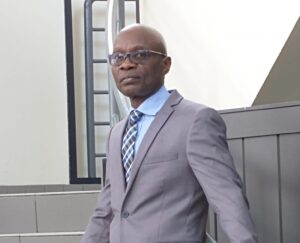
Dr. Arbenser took his Ph.D. in Ag. Economics from the Humboldt University of Berlin specializing in Foreign Direct Investment, Trade, and Macroeconomic Policies. His M.Sc. degree — a major in Applied Economics – with selected courses from the department of Applied Economics, University of Minnesota.
He was Assistant Professor in the Economics Program at the University of Northern British Columbia where he taught courses at the bachelor and master levels and co-supervised students in the MBA program. His rich teaching experience also includes the University of Lethbridge, Humboldt University, and Algonquin College.
He was a member of a team of experts that prepared a report on “Natural Capital – Value of Water in Alberta” for the government of Alberta. His publications have appeared in academic journals including Journal of Developing Areas, Indian Economic Journal, Canadian Journal of Agricultural Economics, and India Foreign Trade Review. He wrote the book “A General Equilibrium Analysis of the Nexus between Foreign Direct Investment, Trade and Macroeconomic Policies: The Case of Ghana.”
Dr. Arbenser presented his research findings at various international conferences including “IATRC Annual Meeting, St. Petersburg, Florida”, “Western Economic Association Conference, San Francisco, California”, “Canadian Economic Association Conference, Montreal” and “International Conference on Development Policy, Tanzania”.
Marc Brennan
Professor
Room H204g

Marc Brennan joined Algonquin College in 2010 with over 15 years of knowledge from the food and beverage industry at the restaurant and hotel levels. He has an excellent knowledge of all components of the hospitality industry. Marc is an Algonquin College graduate in the Hospitality Management – Hotel & Restaurant Diploma as well as the Bachelor of Hospitality and Tourism Management Honours (BHTM) program, and has his MBA in International Hospitality & Service Industries Management, with a specialization in Asset and Revenue Management from the Glion Institute of Higher Education. He currently teaches Financial Accounting, Managerial Accounting and Financial Analysis.
Elias Giannakopoulos
Professor
Room H217c

Elias Giannakopoulos holds an MBA from the University of Guelph and a BA (Hons) from the University of Birmingham in the UK. Mr. Giannakopoulos has been teaching at Algonquin College since 2002. His industry experience includes positions in the military and various hospitality organizations within the resort, hotel, restaurant, nightclub, and golf course settings.
Having lived and worked in Greece, Canada, and England, Elias has acquired more than twelve years of experience in both commercial and institutional Food & Beverage Management. More recently, he was involved in the development of Algonquin’s Bachelor of Hospitality and Tourism Management program. Elias’ research activities have produced papers in both refereed journals and conferences.
Zainub Ibrahim
Professor
Room H217c

Dr. Zainub Ibrahim holds a PhD (2013) and Master’s degree (2009) from the University of Waterloo both specializing in tourism, as well as a Certificate of University Teaching from the University of Waterloo. She has worked on various research projects including projects on the topics of agritourism, tourism and migration, tourism development in marginalized communities, sustainability considerations for tourism in ecologically sensitive regions, and assessing tourism plans. She has a number of peer-reviewed publications in journals and book chapters, and has presented her work in national and international conferences.
Dr. Ibrahim has been teaching tourism courses at post-secondary institutions since 2007. Prior to joining Algonquin in 2016, she taught at Humber College, the University of Waterloo, Champlain St. Lawrence College, and Cégep Limoilou. At Algonquin, she has served as the General Education Coordinator for the School of Hospitality and Tourism, the School of Hospitality and Tourism representative on the Program Quality Assurance Committee (PQAC), and currently serves as a member of the Inclusion and Diversity Circle.
Zohrab Ismail
Professor
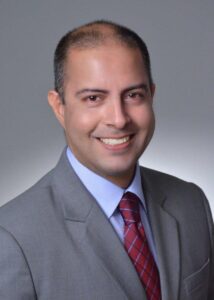
Zohrab started his journey in the Hospitality industry in 1998 where he held various operations and analytics roles with Hertz Corporation in Vancouver and Toronto. He joined InterContinental Hotels Group in Dubai, UAE in 2012 where he was charged with managing revenue analytics for 250 hotels in 42 countries across Asia, Australasia, Middle East, and Africa. In 2016, he returned to Canada to take on a Regional Revenue Management role for IHG’s Eastern Canada hotels.
In 2018, Zohrab joined Algonquin College BHTM as part-time adjunct professor. He spent the first half of 2019 in New Delhi, India onboarding and training the Revenue Management and Analytics department for IHG’s Global Revenue Management.
Zohrab holds a BBA with a minor in Economics from Simon Fraser University and an MBA, double master’s degree, from the University of Western Australia in conjunction with the Copenhagen Business School. In his spare time, Zohrab enjoys spending time outdoors with his wife and three young boys.
Colin Kovacs
Professor
Room WB423c

Colin Kovacs received his Master of Arts from Queen’s University after completing his Bachelor of Arts at the University of Western Ontario. He has taught economics, statistics, and finance for over 15 years at both the DeVry College of Technology, in Toronto, and Algonquin College, in Ottawa.
His research papers have included Determinants of Labour Force Participation Among Older Males in Canada, and Minimum Wage – The Past and Future for Ontario. As well, he is a co-author of Exploring Microeconomics (Nelson, 2nd edition, 2010), and Exploring Macroeconomics (Nelson, 2nd edition, 2010)
Stella Ludlow
Student Success Specialist
Anuj Miglani
Professor
Room H204g

Anuj Miglani has been teaching at Algonquin since 2010 and has over 12 years of industry experience. He is a proud Algonquin College Hospitality Management graduate. His industry experience includes working in restaurants, hotels, and retirement sector in a variety of operations and marketing roles. He is very passionate about learning and education and he has received Masters of Business Administration from University of Guelph.
Anuj has taught variety of courses within different programs in School of Hospitality and Tourism. He currently teaches Technology and Social Media, Marketing and Operations course.
Matthew Moore
Professor
Room H217

Matt Moore is a professor of Sport Management with a specialized focus on finance. With more than 20 years of invaluable experience in the dynamic hospitality industry, Matt brings a wealth of hands-on knowledge to his classroom, specifically in financial management. His extensive background includes a tenure of 13 years at Chances R Restaurant, where he served as co-owner and dedicated manager. During his time in the industry, he developed a profound understanding of economics, entrepreneurship, and the intricacies of restaurant management.
Matt’s academic achievements include a Bachelor’s degree in Economics from Carleton University, which provided him with a solid foundation for understanding the financial aspects of the field. He further pursued his education by earning a Master’s degree in Hospitality and Tourism from Glion University, focusing on Asset and Revenue Management. This advanced degree equipped him with a comprehensive understanding of the financial intricacies associated with the hospitality and tourism sectors.
Beyond his academic and professional accomplishments, Matt has also dedicated his time and expertise to volunteer work in the realm of sports. With over 30 years of competitive sports experience, he possesses firsthand knowledge of the sports industry and its management. This unique combination of practical experience, academic expertise, and a passion for sports has positioned Matt as a sought-after professor and mentor in the field of Sport Management with a concentration in finance.
Martin Taller
Professor

Martin Taller is a professor in the Bachelor of Hospitality and Tourism Management (BHTM) Honours Program and the Tourism -Travel Services program.
Previously, he developed, coordinated and taught in the Marketing and Business Intelligence Research (MBIR) Graduate Studies Program. He has been an instructor at the College since September 2005.
His international education experience includes work with the International Department at Algonquin and as an integral member of a mission to China in May 2006. He has acted as a mentor as well as instructor to Chinese delegation of Professors from Shangdong Jioatong University as well as visiting Professor from various Universities from Iraq.
Martin recently has been co-author of a collaborative Journal of essays published in Worldwide Hospitality and Tourism Themes (WHATT) in 2012 of the most current issues and trends in the Hotel and Hospitality sectors. He has been the lead investigator of several internal and external research projects as well projects with the Applied Research and Innovation Department at the College. He holds a Master of Business Administration (MBA) from the University of Ottawa and a Bachelor of Arts (BA) from Carleton University.
James Waller
Professor
Room H204c

James Waller has worked in the hospitality industry for 14 years, nine of which have been in management roles. He worked for two large restaurant corporations as General Manager among other roles. James also won the SirCorp Manager of the year in 2009.
In 2006 he earned his Bachelor of Commerce with a specialization in Hospitality and Tourism Management from the University of Guelph and in 2011 he obtained his Master’s in Business Administration with a specialization in Hospitality and Tourism Management, also from the University of Guelph.
James has been teaching since 2012 in a variety of different programs including the Bachelor of Hospitality, Culinary Management, the Bartending Program and the Hotel and Restaurant Management Program.
Wes Wilkinson
Professor
Room H217c

Wes Wilkinson began his culinary career in 1976 as an apprentice Chef at Whittington’s in London Ontario.
In 1983 he accepted a position as Sous-Chef at Crab Apples and Auberge du Petit Prince. In 1998 Wes was a Gold medal winner at the New Zealand Lamb Marketing Board, and Culinary Coach for The Berlin Culinary Olympics while at Fanshawe College in London Ontario taking a Silver medal.
Throughout the 1990’s Wes traveled, consulted and worked as a Vice-President in research and development for Sobeys, President’s Choice, Loblaw’s and Wegmans’ under Windsor Marketing Private Labels.
Wes has his Red Seal Cook certification, Baker, Pastry Chef, Food and Nutrition Management (CSNM), Certified Chef de Cuisine (CCC), a diploma in Food Science and Technology from the American Institute of Baking in Kansas and has completed his Masters of Hospitality and Tourism Management with a specialization in Indigenous Education.