Animation
Bring your drawing skills to life through acting and storytelling.
- Consistently ranked as one of the best Animation schools in Canada
- Certified Toon Boom Centre of Excellence means students will be working with industry leading software
- Finish the program with a portfolio that showcases all your best work
Program Availability and Schedule
Availability
Open
Closed
Waitlisted
Start Term
Availability
International
Availability
Competitive?
Fall 2024
Yes
Winter 2025
No
Schedule
Program Summary
Credential
Program Delivery
Program Code
Area of Interest
School
Campus
The three-year Animation Ontario College Advanced Diploma program provides you with the skills needed to meet the standards of the demanding international animation industry. As a student attending one of the best animation programs in Canada (as ranked by Animation Career Review, 2019) , you learn industry-standard technologies, drawing and animation skills.
This program focuses on acting and body mechanics and where you learn traditional, 3D, tradigital (using Toon Boom`s Harmony) and video game animation techniques. Our faculty members are industry professionals who have worked for studios such as:...(read more)
Overview
Bring your drawing skills to life through acting and storytelling.
The three-year Animation Ontario College Advanced Diploma program provides you with the skills needed to meet the standards of the demanding international animation industry. As a student attending one of the best animation programs in Canada (as ranked by Animation Career Review, 2019) , you learn industry-standard technologies, drawing and animation skills.
This program focuses on acting and body mechanics and where you learn traditional, 3D, tradigital (using Toon Boom`s Harmony) and video game animation techniques. Our faculty members are industry professionals who have worked for studios such as:
- Disney
- Sony Image Works
- Mercury Filmworks
- Jam Filled Entertainment
- Atomic Cartoons
- Warner Bros. Animation
- Corus (Nelvana)
- Pip
- Kratts
- Ubisoft
Gain the ability to communicate your ideas through drawing, and to present them visually. Learn to see images in motion -a skill necessary for an animator, and ensure your animated creations are realistic and meet industry standards.
Focus is on layout, location and character design, gesture drawing and anatomy studies of the NUDE model, all culminating in performance-based character animation.
By the end of the program, you have a portfolio and demo reel that showcases your work. This highlights your creativity, skills and proficiency with relevant animation software and technologies, demonstrating that you are ready to enter the field.
There are many job opportunities for graduates of this program. You may find work as a(n):
- animator at a professional animation or game studio
- layout artist
- location or character designer
- 3D animator, rigger or modeller
- background artist
- tradigital rigger
Other employment opportunities might include working on feature films, animated TV series or commercials.
SUCCESS FACTORS
This program is well-suited for students who:
- Are creative and think visually.
- Enjoy a hands-on approach to learning about the animation and game industries.
- Have strong observational and analytical skills.
- Have an aptitude for acting and storytelling.
- Are eager to learn new drawing and animation techniques using new technologies.
Courses
Programs at Algonquin College are delivered using a variety of instruction modes. Courses may be offered in the classroom or lab, entirely online, or in a hybrid mode which combines classroom sessions with virtual learning activities. Upon registration, each full-time student is provided an Algonquin email account which is used to communicate important information about program or course events.
Code:
ANI1513
Course Name:
Life Drawing for Animation I
Course Description:
Life drawing is a fundamental skill for creating believability in our animated drawings of motion. Through the use of casts and models, the ... + Read More
Hours:
56.0
Code:
ANI1550
Course Name:
Animation Design I
Course Description:
Animation design deals with the staging or environment that the animated character interacts with, whether it be a living room or forest loc... + Read More
Hours:
56.0
Code:
ANI1557
Course Name:
Animation Practices and Principles I
Course Description:
The animation industry now relies on multiple tools in the production process. Students learn the principles of animation and how to apply t... + Read More
Hours:
56.0
Code:
ANI1559
Course Name:
Environmental and VIsual Problem Solving I
Course Description:
The ergonomics of design and the understanding of aesthetics through real world observation are essential skills for the animator. Students ... + Read More
Hours:
42.0
Code:
ANI1592
Course Name:
Animation Drawing I
Course Description:
Animation drawing is the backbone of the industry. Using mostly traditional drawing techniques, complemented by 2D tradigital, students appl... + Read More
Hours:
112.0
Code:
ENL1813M
Course Name:
Communications I
Course Description:
Communication remains an essential skill sought by employers, regardless of discipline or field of study. Using a practical, vocation-orient... + Read More
Hours:
42.0
Code:
ANI1523
Course Name:
Life Drawing for Animation II
Course Description:
Animated sequences are created by caricaturing the movements of real human bodies. Students hone their sight measurement and gesture drawing... + Read More
Hours:
56.0
Code:
ANI1551
Course Name:
Animation Design II
Course Description:
A good layout artist is able to evoke an emotional response from their audience. Students create more advanced layouts that include a firmer... + Read More
Hours:
56.0
Code:
ANI1558
Course Name:
Animation Practices and Principles II
Course Description:
Students investigate character movement by applying the basic principles of animation to more complex animated movements such as shifting we... + Read More
Hours:
56.0
Code:
ANI1593
Course Name:
Animation Drawing II
Course Description:
Students learn to develop the principles of animation to a higher level. Studies include animation of more complex actions. Body mechanics a... + Read More
Hours:
112.0
Code:
ANI1618
Course Name:
Character Design I
Course Description:
Designing characters with appeal, originality and emotion is a critical skill of a good character designer. By exploring different character... + Read More
Hours:
42.0
Code:
DSN2100M
Course Name:
Design Thinking
Course Description:
Human-centred approaches are among the best methods of generating innovative solutions for people at work, at home or within your community.... + Read More
Hours:
42.0
Code:
ENL1839
Course Name:
Scriptwriting for Animation
Course Description:
Students are introduced to the basic concepts of screen writing. Students analyze animated and live-action stories to determine the characte... + Read More
Hours:
42.0
Code:
ANI1552
Course Name:
Life Drawing for Animation III
Course Description:
Illustration of three-dimensional drawing involves the utilization of shading. By using simple lighting techniques, students add light and s... + Read More
Hours:
56.0
Code:
ANI1553
Course Name:
Animation Design III
Course Description:
The ability to draw an environment from any angle is a skill needed by any good layout artist. Students use three-point perspective and empl... + Read More
Hours:
56.0
Code:
ANI1567
Course Name:
Character Animation I
Course Description:
Pantomime acting is an integral part of animation. It allows the audience to "instantly read/know" what motivates a character's actions. Stu... + Read More
Hours:
112.0
Code:
ANI1634
Course Name:
3D Animation I
Course Description:
The computer has become the standard viable tool in the creation of animated features. Using the Maya interface, students apply the fundamen... + Read More
Hours:
84.0
Code:
ANI1555
Course Name:
Animation Design IV
Course Description:
For the purposes of performance, animators need guides to create consistency of characters in different views, along with a range of emotion... + Read More
Hours:
56.0
Code:
ANI1590
Course Name:
Character Animation II
Course Description:
How an animated character delivers a line of dialogue is as important as why. The emphasis is on sound, lip sync and dialogue acting involvi... + Read More
Hours:
112.0
Code:
ANI1607
Course Name:
Life Drawing for Animation IV
Course Description:
When animating a scene, animators start planning their action by creating thumbnail drawings. These drawings are quick gesture sketches of t... + Read More
Hours:
56.0
Code:
ANI1635
Course Name:
3D Animation II
Course Description:
Students begin to explore character locomotion. Exercises include walks, runs, acting and reacting. Focus is on the understanding of balance... + Read More
Hours:
84.0
Code:
GED1288
Course Name:
General Education Elective
Course Description:
Students choose one course, from a group of general education electives, which meets one of the following five theme requirements: Arts in S... + Read More
Hours:
42.0
Code:
ANI1578
Course Name:
Life Drawing V
Course Description:
Drawing figures is enhanced by the practice of observational skills. Topics include tonal drawings, such as how to draw drapery, muscular an... + Read More
Hours:
56.0
Code:
ANI1626
Course Name:
2D Digital Animation I
Course Description:
Focus is on creating animation utilizing industry standard animation software, such as Toon Boom Harmony. Becoming familiar with posing and ... + Read More
Hours:
56.0
Code:
ANI1627
Course Name:
Independent Study I
Course Description:
This modular-based course allows students to focus their efforts on a particular animation discipline. Students form a plan with their instr... + Read More
Hours:
112.0
Code:
ANI1628
Course Name:
Masterclass I
Course Description:
Students are exposed to many aspects of animation through lectures, step-by-step instruction and guest speakers from the animation community... + Read More
Hours:
56.0
Code:
ANI1629
Course Name:
Gesture Drawing for Animation I
Course Description:
Gesture drawing is the backbone of the kind of expressive solid drawing that animation requires. Focus is on developing quick dynamic sketch... + Read More
Hours:
28.0
Code:
ANI1584
Course Name:
Life Drawing VI
Course Description:
Students hone their life drawing skills through a continued study of expressive gesture and long pose drawing. Emphasis is on professional q... + Read More
Hours:
56.0
Code:
ANI1586
Course Name:
Business Studies for Animation
Course Description:
Students gain insight into business practices and the principles of operating a small business. The course culminates with the development o... + Read More
Hours:
42.0
Code:
ANI1630
Course Name:
2D Digital II
Course Description:
Continuing on what the students learned in 2D Digital 1, students continue to explore 2D digital software with more advanced techniques incl... + Read More
Hours:
56.0
Code:
ANI1631
Course Name:
Independent Study II
Course Description:
Students continue to develop their skills through learning modules in animation, rigging, layout, storyboarding, special effects or other ar... + Read More
Hours:
112.0
Code:
ANI1632
Course Name:
Masterclass II
Course Description:
Students learn many aspects of animation through lectures, step-by-step lessons and guest speakers from animation professionals. Topics cove... + Read More
Hours:
56.0
Code:
ANI1633
Course Name:
Gesture Drawing for Animation II
Course Description:
Students continue to learn to develop quick dynamic sketching of the human form to express action and emotion. Warning: Nude models are used... + Read More
Hours:
28.0
Careers & Pathways
Careers
Graduates may find employment in the booming animation industry in local (Ottawa) studios, or Canadian animation centres like Toronto, Halifax, Montreal, Vancouver or with studios around the world. Animation grads are sought after with a hiring rate in the +90% range with 100% employer satisfaction according to post graduate surveys. Third year students might also have the opportunity to work in a studio during part of the school year. There are also opportunities for advanced learning to earn a degree through our articulation partners.
Pathways
Please note: There may be more pathways available for this program than are listed here. Please use our Pathways search tool to see every option.
Learning Outcomes
The graduate has reliably demonstrated the ability to:
- Design, create and animate objects and characters with naturalistic and expressive movements and poses.
- Design and create hand-drawn and/or computer-generated drawings using principles of art, design and composition.
- Select and use appropriate tools and technologies for the development of animation projects.
- Contribute to the planning, implementation and evaluation of animation projects.
- Plan, develop and execute a series of effective and believable animation sequences.
- Create and enhance the production of animation sequences and projects using a variety of principles and techniques related to cinematography and art direction.
- Use storytelling skills to create and enhance the development and execution of animation sequences.
- Use performance theory and skills to create and enhance animation.
- Design and produce layouts using perspective, composition and colour theory to enhance visual presentation and mood.
- Present and defend a visual concept to a target audience.
- Use computer skills and appropriate digital asset management techniques to function effectively within a production pipeline.
- Develop, assemble and present a demo reel or portfolio in a manner that meets current industry expectations, and highlights one`s creativity, skills and proficiency with relevant animation software and related technologies.
- Identify and apply discipline-specific practices that contribute to the local and global community through social responsibility, economic commitment and environmental stewardship.
Tuition & Fees
Get an idea of how much each semester will cost with our Tuition and Fee Estimator.
2023/2024 Academic Year
Tuition and related ancillary fees for this program can be viewed by using the Tuition and Fees Estimator tool at www.algonquincollege.com/fee-estimator.
Further information on fees can be found by visiting the Registrar`s Office website at www.algonquincollege.com/ro.
Fees are subject to change.
Additional program-related expenses include:
- Books and supplies cost approximately $1,700 in the first year and $2,000 in the second and third year.
- We recommend that the first year students purchase one portable external hard drive with a capacity of at least 1 terabyte TB.
- Before beginning the program, students are required to purchase either a MacOS or Windows laptop with these minimum specs (cost: $1,700 - $3,000)
- Intel Core i7 processor
- 16GB RAM
- 500GB SSD internal storage
- 15 or larger screen
- Dedicated (Discrete) video card with 4GB RAM
If a Windows laptop is purchased, students must have a valid iCloud account plus the laptop must be configured to run Toon Boon Harmony and Autodesk Maya Software. Below are the specs for both:
Autodesk Maya 2020 technical specs... https://knowledge.autodesk.com/support/maya/troubleshooting/caas/sfdcarticles/
Toon Boom Harmony 17 Premier technical specs... https://www.toonboom.com/products/harmony/system-requirements
Accessories:
Purchase a three-button mouse of your choice. Purchase a mouse pad of your choice. It is recommended that students buy the three-year Apple Care warranty, if purchasing the Mac. Students may wish to purchase a portable drafting table, chair and shelving system. Third year students are required to purchase a Cintiq pen.
Admissions Requirements
All applicants must satisfy both College Eligibility and Program Eligibility requirements.
College Eligibility
- Ontario Secondary School Diploma (OSSD) or equivalent. Applicants with an OSSD showing senior English and/or Mathematics courses at the Basic Level, or with Workplace or Open courses, will be tested to determine their eligibility for admission; OR
- Academic and Career Entrance (ACE) certificate; OR
- General Educational Development (GED) certificate; OR
- Mature Student status (19 years of age or older and without a high school diploma at the start of the program). Eligibility may be determined by academic achievement testing for which a fee of $50 (subject to change) will be charged.
Program Eligibility
- English, Grade 12 (ENG4C or equivalent).
- Submit a portfolio of 10-15 samples illustrating artistic ability. The portfolio must include samples of formal life drawing, perspective drawing, and fantasy or cartoon drawing. Details of an additional home drawing test will be sent upon receipt of your application. Samples of work to be
submitted for assessment must be 8-1/2 x 11. Portfolio submission details can be found on the Algonquin College Additional Admission Requirements website: www.algonquincollege.com/admissionspackages. - NOTE: Interested applicants are welcome to address any portfolio-related inquiries to: design@algonquincollege.com.
- Applicants with international transcripts must provide proof of the subject-specific requirements noted above and may be required to provide proof of language proficiency. Domestic applicants with international transcripts must be evaluated through the International Credential Assessment Service of Canada (ICAS) or World Education Services (WES).
- IELTS-International English Language Testing Service (Academic) Overall band of 6.0 with a minimum of 5.5 in each band; OR TOEFL-Internet-based (iBT) Overall 80, with a minimum of 20 in each component: Reading 20; Listening 20; Speaking 20; Writing 20; OR Duolingo English Test (DET) Overall 110, minimum of 110 in Literacy and no score below 95.
Not sure if you meet all of the requirements? Academic Upgrading may be able to help with that: https://www.algonquincollege.com/access/.
Should the number of qualified applicants exceed the number of available places, applicants will be selected on the basis of their score on their portfolio.
Application Information
ANIMATION
Program Code 1288X01FWO
Applications to full-time day programs must be submitted with official transcripts showing completion of the academic admission requirements through:
ontariocolleges.ca
60 Corporate Court
Guelph, Ontario N1G 5J3
1-888-892-2228
Students currently enrolled in an Ontario secondary school should notify their Guidance Office prior to their online application at www.ontariocolleges.ca.
Applications for Fall Term and Winter Term admission received by February 1 will be given equal consideration. Applications received after February 1 will be processed on a first-come, first-served basis as long as places are available.
International applicants please visit this link for application process information: https://algonquincollege.force.com/myACint/.
For further information on the admissions process, contact:
Registrar`s Office
Algonquin College
1385 Woodroffe Ave
Ottawa, ON K2G 1V8
Telephone: 613-727-0002
Toll-free: 1-800-565-4723
TTY: 613-727-7766
Fax: 613-727-7632
Contact: https://www.algonquincollege.com/ro
Additional Information
Program Resources
Please note: All life drawing courses involve nudity.
Contact
Tom Crook
Program Coordinator
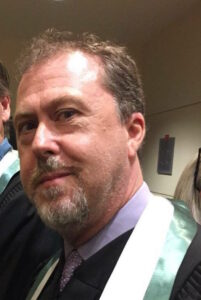
Tom earned a BA from the University of Western Ontario and he graduated with honours from the Algonquin College Animation Program. Tom has worked over 12 years in the animation industry for a variety of animation studios including Mercury Filmworks, Funbag, Amberwood, Atomic and Dynomight Cartoons here in Ottawa. He is an experienced layout supervisor with credits such as Timothy Tweedle and Franklin’s Magic Christmas and as a layout artist on TV series’ such as Redwall, Recue Heroes, Anne of Green Gables, Franklin, Robo Roach, Undergrads and many others including the feature film Heavy Metal 2000. Tom has also designed locations for several TV series, commercials, Christmas specials and has been a layout and posing supervisor for Dynomight Cartoons.
Neil Hunter
Program Coordinator

Neil has over 25 years experience in the animation industry. He has been involved in every aspect of the field from running his own small commercial studio to working on feature films and has held positions including senior animator, storyboard artist, story editor, designer, director, head creative and associate producer. Neil has worked for studios such as Disney, Universal Cartoons, Film Roman, Nelvana and Cinar as well as on award winning projects such as The Raccoons, Beeteljuice, Teenage Mutant Ninja Turtles, X-Men Evolution, Undergrads, RoboRoach, Jacob Two Two, Mickey’s Once Upon a Christmas, Where on Earth is Carmen Sandiego? and many others. During his nearly 10 years at the college Neil has written curriculum for the current 3 year advanced diploma program as well as the college’s international partners in India and South Africa where he travelled and taught. Neil has twice been nominated for an Emmy Award for Outstanding Achievement in Animation and is currently on the Ottawa International Animation Festival’s advisory board.
Paul West
Program Coordinator

Paul West has been involved in the animation industry for over 20 years. He has worked on many feature film productions for major studios including Disney, Warner Brothers and Don Bluth. These films have included The Goofy Movie, Space Jam, and Thumbelina. Paul has also worked on other feature films such as Ferngully: The Last Rainforest and All Dogs Go to Heaven 2. Some of Paul’s television credits include the award winning and locally produced Raccoons as well as Pink Panther, Fish Police, Monster Force, Flash Gordon, Ned’s Newt and Jacob Two Two. Paul has recently completed work at Mercury Filmworks Studio in Ottawa on the ever popular Disneyshow Jimmy Two Shoes. Paul has worked in the industry as a inbetweener, a key cleanup artist, an animator, a character designer, storyboard revision artist and as a posing and animation supervisor. Paul has been a full time professor at the college for 16 years. He was responsible for writing the curriculum for the 3 year advanced diploma program as well as writing curriculum for the college’s international partners in India, South Africa and China. In 1998 Paul won the Students’ Association with Excellence in Teaching Award and in 2005 Paul was nominated and was a finalist for the Capital Educators Award. Having been trained in classical animation and self-taught in digital 2D animation Paul brings a wide range of experience to the program.
Joel Shemrock
Program Coordinator - Winter Intake
Jeff Amey
Professor

Jeff’s experience in the animation industry dates back to 1998 after graduating with honours and receiving an advanced diploma in animation from Sheridan College. After years of freelancing he decided to root himself in Ottawa and has worked for many various animation studios in North America. Jeff’s experience as a freelance artist had him working on various animated shows in many different capacities such as a traditional animator, posing supervisor, story supervisor, assistant director, writer, overseas animation supervisor and story artist. Some of his credits include shows such as Anthony Ant, Watership Down, The Oblongs, Jimmy Two Shoes, The Undergrads, Bubble Guppies, Cloudy With A Chance Of Meatballs, Kingdom Force, Ripping Friends, My Little Pony, King, Daniel Tiger’s Neighbourhood, Bob the Builder, For Better or For Worse, Ren and Stimpy and many more. Jeff brings over 16 years of part time teaching experience to the Animation program and recently came on board as a full-time professor in 2019. Since then he has also had the privilege of being a project lead in the development of the Drawing Foundations for Animation and Illustration program. Jeff continues to balance his teaching and animation career in order to remain involved and current in the animation field.
Keith Archibald
Professor

Keith has over 23 years of experience in the animation industry. Taking on the roles of senior animator, animation director, supervisor and designer on shows from Warner Brothers, Netflix, Nickelodeon, Nelvana, Cartoon Network, Teletoon, etc. He has been credited with working on top animated productions such as Final Space, DC Super Hero Girls, The Loud House, Tom and Jerry, Pirate’s Passage, Gerald McBoing Boing and many more. Keith has taught various courses within the Algonquin Animation program over the past 20 years such as Animation Drawing, Character Animation, 2D Digital Animation, Life Drawing and Character Design. He also helps out at the local animation studios by teaching professional animators and enabling them to advance or refresh their skills. During the summer, Keith is always doing his best to stay current with the latest animation software as well as keeping his skills sharp by animating on various productions.
Stephen Young
Professor

Stephen has over 24 years of experience as a digital artist in the video game and animation industry. He has been involved in almost every aspect of the CGI production pipeline, from creating concept art to 3D modeling, 3D animation, VFX, and compositing. He has worked with companies such as Atari, Warner Bros. Interactive Entertainment, Sony Pictures Interactive, Disney Interactive Studios, and Lucas Arts.
Stephen is an alumnus of the Algonquin college animation program and recently obtained a Master’s degree in 3D Animation from Buckinghamshire New University. He has shared his knowledge and passion for digital art and Animation with learners in a post-secondary environment for over 20 years.