Forestry Technician
Get an edge on a career in the great outdoors - earn a minimum of 10 industry certifications plus a Diploma.
- Enjoy a more personalized learning environment with our small classes
- Benefit from supportive and experienced faculty who are active in their industry
- Gain the latest and best industry-specific knowledge and skills to be career-ready upon graduation
Program Availability and Schedule
Availability
Open
Closed
Waitlisted
Start Term
Availability
International
Availability
Competitive?
Fall 2024
No
Schedule
Program Summary
Credential
Program Delivery
Program Code
Area of Interest
School
Campus
Work Integrated Learning
The two-year Forestry Technician Ontario College Diploma program, delivered in a compressed format over 45 weeks, is the most hands-on and field-oriented program of its kind in Ontario. It prepares students in the implementation and influence of best practices of good forest management in an ecological, environmental and social context. Students interact with forest industry, sustainable forest license holders, private woodlot owners and government organizations at all levels.
Gain experience in the planning, execution and monitoring of forest, environment, ecosystem and wildlife management activities....(read more)
Overview
Get an edge on a career in the great outdoors - earn a minimum of 10 industry certifications plus a Diploma.
The two-year Forestry Technician Ontario College Diploma program, delivered in a compressed format over 45 weeks, is the most hands-on and field-oriented program of its kind in Ontario. It prepares students in the implementation and influence of best practices of good forest management in an ecological, environmental and social context. Students interact with forest industry, sustainable forest license holders, private woodlot owners and government organizations at all levels.
Gain experience in the planning, execution and monitoring of forest, environment, ecosystem and wildlife management activities.
Spend approximately one-third of class time outdoors, exploring a variety of landscapes such as forests, parks and private woodlots. Practise collecting, compiling and analyzing forest resource data while learning to make recommendations for its use.
Benefit from the opportunity to earn a minimum of 10 industry certifications. These are customizable and give you an advantage entering the workforce.
In third semester, complete an 80-hour field placement. This gives you the opportunity to practise new skills in a real work setting.
With a Forestry Technician diploma, graduates may find entry-level work in the fields of:
- tree marking
- forest inventory
- forest environment and ecosystem assessment
- compliance monitoring
- forest renewal
- harvesting
- parks and wildlife management
- nature interpretation
- arboriculture
- bio-energy management
- forest fire control
SUCCESS FACTORS
This program is well-suited for students who:
- Thrive in an active, outdoor, hands-on learning environment.
- Have an interest in protecting, sustaining and enhancing our natural environment and forest ecosystem.
- Can work well independently or as a member of a team.
- Have good communication skills.
Courses
Programs at Algonquin College are delivered using a variety of instruction modes. Courses may be offered in the classroom or lab, entirely online, or in a hybrid mode which combines classroom sessions with virtual learning activities. Upon registration, each full-time student is provided an Algonquin email account which is used to communicate important information about program or course events.
Code:
DAT7670
Course Name:
Computer Applications
Course Description:
The ability to communicate effectively using technology is essential in the education and employment fields. Students develop and apply coll... + Read More
Hours:
28.0
Code:
ENL7777
Course Name:
Communications I
Course Description:
Communication remains an essential skill sought by employers, regardless of discipline or field of study. Using a practical, vocation-orient... + Read More
Hours:
42.0
Code:
FOR7310
Course Name:
The Forest Environment
Course Description:
Students practise the basic skills required in forestry throughout Canada. Students interpret and determine areas, coordinates, compass dire... + Read More
Hours:
56.0
Code:
FOR7311
Course Name:
Dendrology
Course Description:
Focus is placed on the identification of local forest vegetation in the summer and winter conditions by leaf, twig, bark, log and form. Stud... + Read More
Hours:
56.0
Code:
FOR7312
Course Name:
Ecology
Course Description:
Students examine the silvics of tree species, which deals with the growth and development of single trees and of forests, in their natural e... + Read More
Hours:
56.0
Code:
FOR7314
Course Name:
Soils and Landforms
Course Description:
The characteristics of common soils with emphasis on the physical, chemical and biological features are explored. Students spend a portion o... + Read More
Hours:
42.0
Code:
FOR7316
Course Name:
Wildlife
Course Description:
Students learn to identify various species of wildlife. Special emphasis is placed on the identification and management of forest hawk habit... + Read More
Hours:
56.0
Code:
FOR7317
Course Name:
Remote Sensing
Course Description:
Students are introduced to remote sensing using historical and modern forest imaging techniques such as LiDAR, Multispectral and Landsat. Fo... + Read More
Hours:
56.0
Code:
FOR7322
Course Name:
Forest Health
Course Description:
Focus is on the identification and management of diseases and insects that affect forest trees. Trees are graded for their potential as grow... + Read More
Hours:
42.0
Code:
ENL7679
Course Name:
Communications for Forestry Technicians
Course Description:
Students develop workplace communication skills. Topics include written and oral reports; correspondence; technical writing style; resumes; ... + Read More
Hours:
42.0
Code:
FOR7313
Course Name:
Geographic Information Systems
Course Description:
Analysis of digitized spatial data is presented. Students practise basic skills in manipulating and presenting data with emphasis on applica... + Read More
Hours:
60.0
Code:
FOR7321
Course Name:
Mensuration
Course Description:
Students determine the growth and yield of trees and forest stands. Emphasis is placed on methods and techniques of various forest inventori... + Read More
Hours:
49.0
Code:
FOR7324
Course Name:
Silviculture
Course Description:
Students study silviculture systems, site preparation, reforestation, tending, thinning and vegetation control. Emphasis is placed on a good... + Read More
Hours:
64.0
Code:
FOR7325
Course Name:
Harvesting
Course Description:
Regulations, licenses, equipment, methods, processes, and layouts employed in different harvesting systems are explored. Careful logging and... + Read More
Hours:
49.0
Code:
FOR7327
Course Name:
Fire Management
Course Description:
Students learn the organizational structure and practices used to control forest fires. Initial attack procedures are studied. The use of pr... + Read More
Hours:
56.0
Code:
FOR7340
Course Name:
Arboriculture
Course Description:
Students are introduced to the care of trees within an urban and urban-interface environment. Students practise using the different tools fo... + Read More
Hours:
40.0
Code:
FOR7351
Course Name:
Parks Operation
Course Description:
Students are introduced to a number of major park systems and the agencies that operate and manage them in Ontario. Students gain knowledge ... + Read More
Hours:
42.0
Code:
GED1108
Course Name:
General Education Elective
Course Description:
Students choose one course, from a group of general education electives, which meets one of the following five theme requirements: Arts in S... + Read More
Hours:
42.0
Code:
FOR7331
Course Name:
Land Stewardship
Course Description:
Best management practices of natural resources on privately owned lands are highlighted. Students examine strategies to maintain or enhance ... + Read More
Hours:
42.0
Code:
FOR7333
Course Name:
Forest Access
Course Description:
The proper locating of various types of forest access roads and trails is considered. Bridge and culvert sizing, installation and soil erosi... + Read More
Hours:
42.0
Code:
FOR7334
Course Name:
Forest Management
Course Description:
Students apply knowledge from previous courses to the realistic preparation of parts of a sustainable Forest Management Plan, and also compl... + Read More
Hours:
84.0
Code:
FOR7335
Course Name:
Ecological Land Classification
Course Description:
Standardized and consistent ecosystem inventory is needed by resource managers and planners. Students identify, describe and name Ontario ec... + Read More
Hours:
36.0
Code:
FOR7337
Course Name:
Tree Marking
Course Description:
The knowledge gained from previous and concurrent courses is brought to the practical application of tree marking. The student gains field e... + Read More
Hours:
42.0
Code:
FOR7339
Course Name:
Certifications
Course Description:
Students have the opportunity to gain a minimum of ten certifications in specialties that they choose from a selection that is offered. Some... + Read More
Hours:
60.0
Code:
FOR7346
Course Name:
Advanced Techniques
Course Description:
Global positioning systems are a critical tool for data collection and navigation in forestry. Using a combination of field exercises and se... + Read More
Hours:
42.0
Code:
FOR7347
Course Name:
Freshwater Environments
Course Description:
The physical, chemical and biological characteristics of freshwater environments are presented. Students specifically gain an understanding ... + Read More
Hours:
42.0
Code:
FOR7348
Course Name:
Silvicultural Surveys
Course Description:
Surveys, to verify the success of silvicultural operations, are essential to ensure forest sustainability. Focusing on the performance of re... + Read More
Hours:
42.0
Code:
FOR7352
Course Name:
Field Placement
Course Description:
Students are required to complete a two-week, forestry-related field placement. This provides students with an opportunity to network with p... + Read More
Hours:
80.0
Careers & Pathways
Careers
Graduates are well prepared to enter the workforce or to further their studies through university or the natural resources law enforcement (conservation officer) program. Geographic mobility is usually a prerequisite to employment with forestry companies, governments, private woodlot owners, hydro, municipalities, conservation authorities or resource consultants. Graduates may find entry-level work in the fields of tree marking, forest inventory, forest environment and ecosystem assessment, compliance monitoring, forest renewal, harvesting, parks, wildlife management, nature interpretation, arboriculture, bio-energy management and forest fire control. Self-employment as a forestry contractor or consultant is another avenue graduates may decide to pursue.
Pathways
Please note: There may be more pathways available for this program than are listed here. Please use our Pathways search tool to see every option.
Learning Outcomes
The graduate has reliably demonstrated the ability to:
- Conduct forest inventory surveys and field measurements to determine forest resources and values in forests and woodlots.
- Assess soil characteristics, vegetation and wildlife habitats to identify their interactions within forest ecosystems.
- Perform technical functions in silvicultural operations and assist in the monitoring and evaluation of the effectiveness of silvicultural practices.
- Collect, analyze, interpret, and display spatial data using mapping technology and Geographical Information Systems (GIS) to contribute to forest resource management.
- Contribute to sustainable forest management plans, including conservation and rehabilitation measures, taking into consideration the perspectives of a variety of stakeholders and the requirements of relevant legislation and regulations.
- Identify and analyze forest diseases, pests, invasive species and other disturbance events and implement mitigation strategies to maintain and improve forest ecosystems.
- Select, operate, troubleshoot and maintain tools and equipment in a variety of environmental conditions and in accordance with safety and operating standards.
- Work independently and in a collaborative environment while applying effective teamwork, leadership and interpersonal skills.
- Communicate technical information to a variety of stakeholders in oral, written, visual and electronic forms.
- Develop strategies for ongoing professional development to enhance work performance in the forestry sector.
- Identify and apply discipline-specific practices that contribute to the local and global community through social responsibility, economic commitment and environmental stewardship.
Tuition & Fees
Get an idea of how much each semester will cost with our Tuition and Fee Estimator.
2023/2024 Academic Year
Tuition and related ancillary fees for this program can be viewed by using the Tuition and Fees Estimator tool at www.algonquincollege.com/fee-estimator.
Further information on fees can be found by visiting the Registrar`s Office website at www.algonquincollege.com/ro.
Fees are subject to change.
Additional program related expenses include:
- Resources will be available as hardcover and/or eTexts. Estimated cost of texts is approximately $150 per semester.
- Major, one-time equipment costs are approximately $600.
- As part of a two-week certification period in the final level, fees for certification courses are assessed separately and are announced early in the program.
- Students should arrive with a CSA-approved hard hat and 8 high work boots, a Fox 40 whistle, a high visibility vest, clear safety glasses and equipment to take pictures (smart phone). A compass, wedge prism and diameter tape are included in program fees and provided to all students at the start of the program.
Admissions Requirements
All applicants must satisfy both College Eligibility and Program Eligibility requirements.
College Eligibility
- Ontario Secondary School Diploma (OSSD) or equivalent. Applicants with an OSSD showing senior English and/or Mathematics courses at the Basic Level, or with Workplace or Open courses, will be tested to determine their eligibility for admission; OR
- Academic and Career Entrance (ACE) certificate; OR
- General Educational Development (GED) certificate; OR
- Mature Student status (19 years of age or older and without a high school diploma at the start of the program). Eligibility may be determined by academic achievement testing for which a fee of $50 (subject to change) will be charged.
Program Eligibility
- English, Grade 12 (ENG4C or equivalent).
- Mathematics, Grade 11 (MCF3M or equivalent).
- Applicants with international transcripts must provide proof of the subject-specific requirements noted above and may be required to provide proof of language proficiency. Domestic applicants with international transcripts must be evaluated through the International Credential Assessment Service of Canada (ICAS) or World Education Services (WES).
- IELTS-International English Language Testing Service (Academic) Overall band of 6.0 with a minimum of 5.5 in each band; OR TOEFL-Internet-based (iBT) Overall 80, with a minimum of 20 in each component: Reading 20; Listening 20; Speaking 20; Writing 20; OR Duolingo English Test (DET) Overall 110, minimum of 110 in Literacy and no score below 95.
Should the number of qualified applicants exceed the number of available places, applicants will be selected on the basis of their proficiency in English and mathematics.
A current Standard First Aid and CPR certificate is preferred prior to registration. Otherwise, the student must obtain the certificate within the first two months of the first level. Applicants must sign and submit a Forestry Technician Program Assumption of Risk and Indemnifying Release Form.
Application Information
FORESTRY TECHNICIAN
Program Code 0108X04FPM
Applications to full-time day programs must be submitted with official transcripts showing completion of the academic admission requirements through:
ontariocolleges.ca
60 Corporate Court
Guelph, Ontario N1G 5J3
1-888-892-2228
Students currently enrolled in an Ontario secondary school should notify their Guidance Office prior to their online application at www.ontariocolleges.ca.
Applications for Fall Term and Winter Term received by February 1 will be given equal consideration. Applications received after February 1 will be processed on a first-come, first-served basis as long as places are available.
International applicants applying from out-of-country can obtain the International Student Application Form at https://algonquincollege.force.com/myACint/ or by contacting the Registrar`s Office.
For further information on the admissions process, contact:
Registrar`s Office
Algonquin College in the Ottawa Valley
1 College Way
Pembroke, ON K8A0C8
Local: 613-735-4700
Toll-free 1-800-565-4723
TTY: 1-866-620-3845
Fax: 613-735-4739
https://algonquincollege.com/pembroke
Additional Information
Program Resources
In order to prepare our graduates to be the best in their field, we believe the educational environment must closely resemble the work environment, including the associated risks. Risk, therefore, is an inherent part of the educational environment.
A total of two weeks are spent on placement in a resource-oriented organization chosen by the student, anywhere in the world. Should the opportunity arise, the student may choose instead to partake in an applied forestry research project supervised by the college and/or one of its partners.
Note: Students may register in the Provincial Scaling course in lieu of field placement. The cost of this course is in addition to the previously established program tuition.
Students contemplating taking Forestry at a university should seriously consider our program first, as we provide a one year, hands-on, practical, field-oriented program. Our articulation agreement with Lakehead University allows you to enter their Forestry or Forest Conservation program in the second or third year. We also have an articulation agreement with the University of New Brunswick in their Faculty of Forestry and Environmental Management.
Applicants who participated in the Specialist High Skills Major - Forestry and/or Environment may be eligible for exemptions, in whole or in part, for some of the Forestry Technician courses. Applicants should bring documents to the program coordinator for review, particularly co-op placement and industry certifications.
Contact
Peter Arbour
Program Coordinator
Room 304
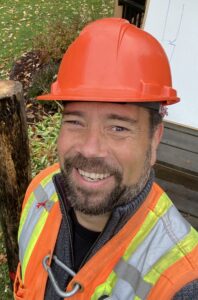
Peter has been employed by Algonquin College as a part-time professor of Dendrology in our Urban Arboriculture program. Since June 2008, Peter has served as the Operations Manager at the Petawawa Research Forest (PRF) and has been responsible for leading all phases of forestry planning and implementation including oversight of research activities as well as staffing, promotional activities, community engagement, and budgeting. In addition to his extensive leadership skills, Peter was previously employed as a Forestry and Research Technician and possesses a wealth of technical skills relevant to the classroom including those related to collection and management of forest stand data, conducting stand assessments, and leading auditing and mensuration activities. Peter holds a Forest Technician Diploma from Sir Sandford Fleming College and a Bachelor of Arts with a Major in English Language and Literature from Wilfrid Laurier University. Peter has actively participated in many advisory committees including two program advisory committees here at Algonquin College.
Peter is originally from Midland, Ontario, and has called Deep River his home for the last 20 years. He loves the outdoors, and fills his free time with hiking, cycling and cross country skiing. He is also an avid guitarist and is always happy to be playing music.